
by Scott Douglas Jacobsen and Irina Tsukerman
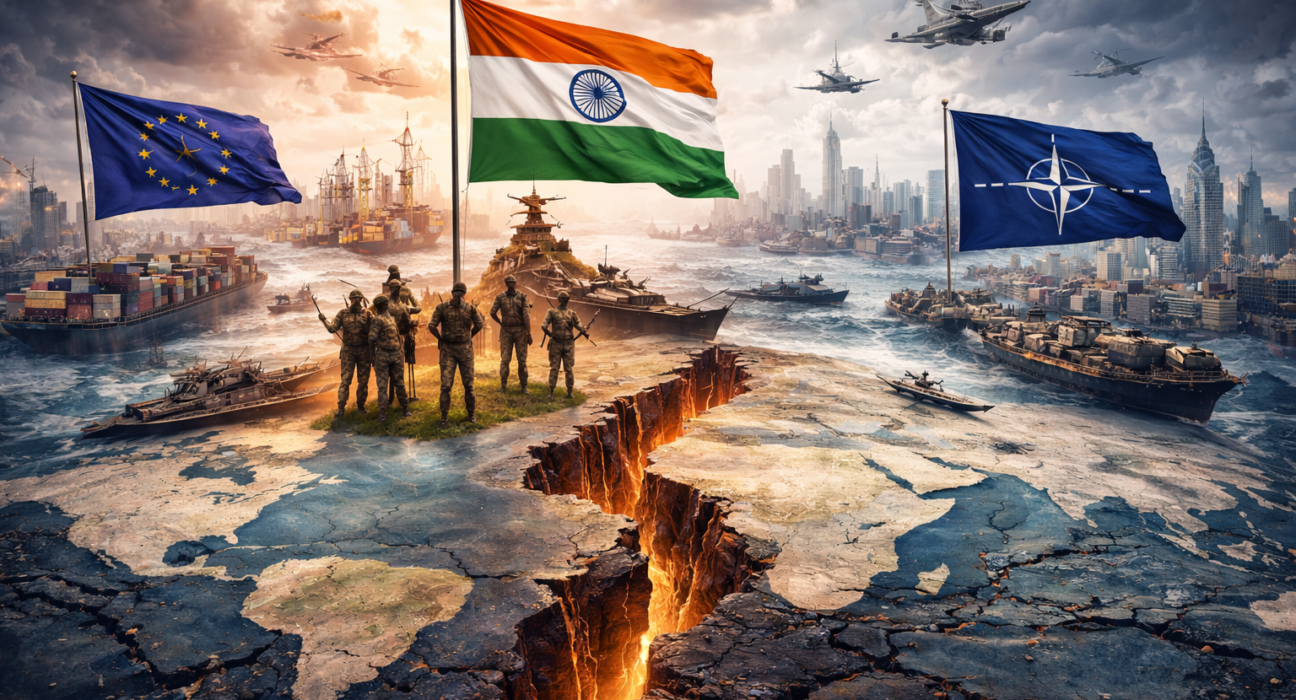
How is India’s evolving diplomacy reshaping global trade, security alliances, and the balance of power amid realignments by the U.S., Europe, China, and Russia?
Irina Tsukerman is a human rights and national security attorney based in New York and Connecticut. She earned her Bachelor of Arts in National and Intercultural Studies and Middle East Studies from Fordham University in 2006, followed by a Juris Doctor from Fordham University School of Law in 2009. She operates a boutique national security law practice. She serves as President of Scarab Rising, Inc., a media and security strategic advisory firm. Additionally, she is the Editor-in-Chief of The Washington Outsider, which focuses on foreign policy, geopolitics, security, and human rights. She is actively involved in several professional organizations, including the American Bar Association’s Energy, Environment, and Science and Technology Sections, where she serves as Program Vice Chair in the Oil and Gas Committee. She is also a member of the New York City Bar Association. She serves on the Middle East and North Africa Affairs Committee and affiliates with the Foreign and Comparative Law Committee.
In this wide-ranging interview, Scott Douglas Jacobsen speaks with Irina Tsukerman, a human rights and national security attorney, about accelerating global realignments driven by trade shocks, security pressures, and geopolitical fragmentation. Tsukerman analyzes India’s growing influence through EU trade engagement, recalibrated ties with China and Russia, and expanded diplomacy with Arab states. She examines fractures within NATO, Europe’s struggle for strategic cohesion, and China’s adaptive global strategy across Latin America, Africa, and Europe. Tsukerman warns against underestimating Russia’s disruptive capacity and stresses that collective defence frameworks remain essential as interconnected threats reshape the international order.
Scott Douglas Jacobsen: Big picture: we have Trump–Carney friction and posturing at Davos about the global economy, particularly the Russia–Ukraine war. Mark Carney’s remarks at Davos drew attention in that context. India is also moving aggressively on trade and diplomacy. China is engaging directly with Keir Starmer of the United Kingdom. The most significant development clearly centers on Modi. What are your thoughts on how he is making essential moves on economic ties with major players, especially the EU and China?
Irina Tsukerman: India—and to a significant degree China—have benefited from the broader pattern of U.S.-driven tariff shocks and trade realignments. In India’s case, one concrete development is the EU–India free trade agreement, concluded in January 2026 after years of negotiations that repeatedly stalled.
The EU’s trade framework is rules-heavy and often slow-moving. India has historically been cautious about broad tariff liberalization, but the agreement reflects a negotiated approach that lowers or eliminates tariffs across much of the trade relationship while preserving protections in sensitive sectors. It represents a major political and economic alignment, though it still requires full ratification before complete implementation.
India is also deepening ties with Arab states through formal diplomacy. In late January 2026, Prime Minister Modi received a delegation that included Arab foreign ministers and the Secretary-General of the League of Arab States for the second India–Arab Foreign Ministers’ Meeting. This provides a factual basis for describing expanded India–Arab engagement at senior levels, including discussions across energy, technology, and related sectors, though specific outcomes should be defined cautiously unless formally announced.
Regarding China and the United Kingdom, Keir Starmer met with Xi Jinping in Beijing in January 2026, with both sides framing the visit as part of renewed economic engagement.
As for IMEC, it is best described as a proposed connectivity initiative that has faced uncertainty amid regional instability and ongoing maritime security disruptions. Claims about a specific Russia–India–U.S. triangulation strategy, or a likely Russia–China–India trilateral alignment, should be treated as analytical interpretations rather than settled outcomes unless supported by formal policy commitments or official agreements.
India is strengthening its defence relationship with Russia again, more openly than in the past decade, though not without limits. At the same time, India has stabilized aspects of its relationship with China. While core border disputes remain unresolved, the two sides have restored high-level dialogue, reopened some travel and communication channels, and India is cautiously reassessing limited Chinese investment in specific sectors, despite persistent distrust and security concerns. A notable signal of this recalibration was India’s senior-level participation in the Shanghai Cooperation Organization summit in China in August. Overall, Modi has benefited significantly from the global realignments triggered by Trump-era policy shifts, and so has China.
Jacobsen: What do you make of this shift? It is not a simple movement from east to west, but rather the emergence of fault lines and fractures among many partners. Are we seeing long-standing, distrust-heavy bilateral relationships unravel at an accelerated pace?
Tsukerman: Yes and no. On one level, the U.S.–NATO relationship is showing clear strain. There is credible criticism that some European countries have underinvested in their own defence and relied excessively on U.S. security guarantees. That is the most visible fracture.
At the same time, the European Union faces internal pressure from Russian and pro-Russian actors operating within smaller, politically fragile, or economically weaker states. These efforts aim to pull countries away from the Brussels-centred consensus and toward populist, nationalist, Russia-aligned positions. That is another significant fissure.
However, if European states coordinate more effectively, they have far greater economic and political potential than any Russia-centred alternative. Hungary’s economic difficulties illustrate the limits of that alignment, while Poland—despite pandemic-related disruptions—continues to grow and is likely to play a larger leadership role within Europe in the coming years. We are also seeing minilateral groupings, such as Baltic and Black Sea coalitions, taking the lead on joint defence and economic initiatives that bring countries together rather than drive them apart.
Western European powers that have historically competed—particularly France and Germany—are increasingly acknowledging the need for cooperation in the face of shared threats. At the same time, Europe remains divided over whether it can sustain itself economically, politically, and militarily without U.S. leadership, and whether China could serve as an alternative trade partner or stabilizing force. A growing number of European states are concluding that China poses a greater strategic risk than a long-term solution.
That debate has not been resolved as decisively as Europe’s response to Russian aggression, which has forced a degree of unity. Even so, Europe remains slow to act, reactive rather than proactive, and constrained by regulatory and anti-competitive frameworks developed over decades. Those constraints are increasingly incompatible with a security-driven environment. It is likely only a matter of time before they are deprioritized in favour of a more unified and strategically focused European approach.
This is an existential matter. It is about survival. NATO, in its current form, may evolve or be restructured, but some form of collective defence framework is indispensable. There is no viable way to confront the growing cluster of interconnected threats without it.
There is a tendency to believe that China has been weakened in Latin America, that Iran is in terminal decline due to its failures, and that sanctions and military losses have severely diminished Russia. While each of these assessments contains elements of truth, none of these actors should be discounted. North Korea, in particular, is advancing in largely unexpected ways, including its gradual normalization of engagement even with some European states, not only with the pro-Russian bloc.
China has experienced setbacks in Latin America, but these are largely cosmetic rather than structural. They do not amount to significant infrastructure losses. With limited exceptions—such as the Panamanian port controversy, whose long-term outcome remains uncertain—China’s infrastructural footprint in Latin America remains substantial. In parallel, China is adopting a more selective investment strategy in Africa, concentrating resources more carefully than in previous cycles.
China is also benefiting from the growing fracture between the United States and Europe, as European countries increasingly seek alternative trade arrangements and partnerships. That dynamic creates additional openings for Beijing.
At the same time, with Trump initiating tensions with South Korea, uncertainty grows over how much strategic weight Japan, Taiwan, and the broader Asia-Pacific bloc can carry independently if U.S. commitments are perceived as unreliable and European governments do not fully grasp how Indo-Pacific instability threatens their own sovereignty and long-term political survival. Many European states have not yet fully internalized this connection.
Under these conditions, China is performing relatively well.
Russia, by contrast, is not performing well militarily or economically, and that reality has been consistent. However, Russia remains capable of inflicting significant damage. Its strategic priority has never been internal development but rather the deliberate creation of disruption and instability. Russia is more focused on harming neighbours and perceived adversaries—real or imagined—than on generating domestic benefits. It derives strategic value from disruption itself.
While Russia may not be competitive with the EU, the United States, or China in economic or technological terms, the scale of damage it can still impose is disproportionate and severe. This applies politically as much as it does through sabotage, disinformation, and other forms of hybrid warfare.
Jacobsen: Thank you very much for the opportunity and your time, Irina.