
by Scott Douglas Jacobsen and Irina Tsukerman
Irina Tsukerman is a human rights and national security attorney based in New York and Connecticut. She earned her Bachelor of Arts in National and Intercultural Studies and Middle East Studies from Fordham University in 2006, followed by a Juris Doctor from Fordham University School of Law in 2009. She operates a boutique national security law practice. She serves as President of Scarab Rising, Inc., a media and security strategic advisory firm. Additionally, she is the Editor-in-Chief of The Washington Outsider, which focuses on foreign policy, geopolitics, security, and human rights. She is actively involved in several professional organizations, including the American Bar Association’s Energy, Environment, and Science and Technology Sections, where she serves as Program Vice Chair in the Oil and Gas Committee. She is also a member of the New York City Bar Association. She serves on the Middle East and North Africa Affairs Committee and affiliates with the Foreign and Comparative Law Committee.
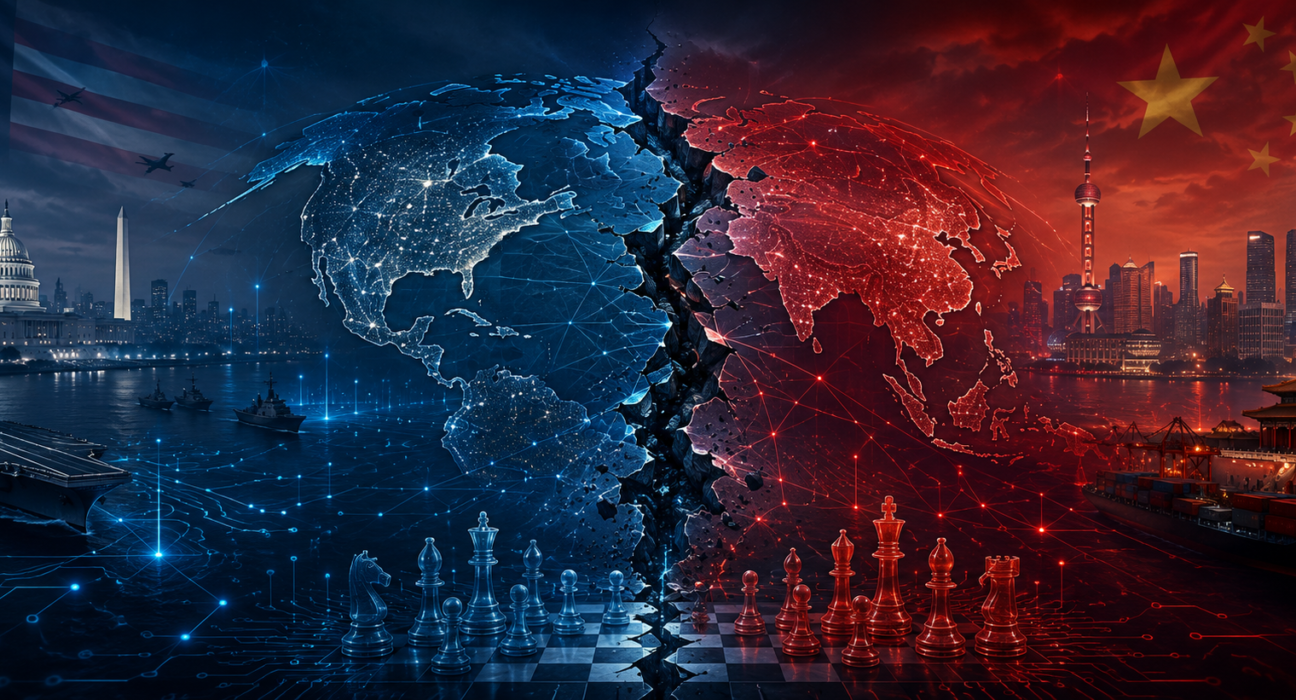
Scott Douglas Jacobsen interviews Irina Tsukerman, a national security attorney, on the limits of U.S.–China cooperation. Tsukerman argues that deep ideological divides, mutual distrust, and strategic competition constrain meaningful collaboration, even in areas like AI governance. She highlights China’s emphasis on sovereignty and regime security versus U.S. liberal internationalism, noting parallels to Cold War dynamics. The discussion underscores how technological rivalry, information control, and competing global visions undermine prospects for sustained, good-faith cooperation.
Scott Douglas Jacobsen: It is discussed plenty, but not in this frame. It is usually discussed adversarially. Geopolitics, as people have seen in the last eight years, can be unpredictable, shaped by personalities, leaders, and competing ideological frames—not simply by formal political structures. The United States and China are peer, or near-peer, powers at loggerheads in many ways, sometimes because of personalities and sometimes because of the pragmatics of competition.
So, what about a context of mutually assured benefit between the United States and China, whether hypothetical or contemporary, that could develop into something substantial? Is there a context in which that could happen—militarily, economically, technologically, or otherwise? The only one posed to me was by Neil Sahota, based on AI as a foundation for mutual benefit, where regulation is very important. Many relevant experts internationally see AI governance as requiring some degree of cross-border coordination.
Irina Tsukerman: I would say it is extremely unlikely, even aspirationally. The reasons are several. First, the difference between China and the US at this point is not only strategic competition or personality-driven tension. It is also ideological and systemic. They have fundamentally different, often incompatible, visions of how the world should work.
The US vision is based partly on liberal internationalism, partly on American exceptionalism, and, under Trump, much more on transactional power politics. China’s vision is one in which it seeks a larger role in shaping the international order under frameworks more compatible with Chinese Communist Party priorities. That includes state sovereignty, regime security, economic dependence, technological influence, and governance models the US would find highly problematic.
This model would not necessarily require formal Chinese rule over others, but it would require deference to China’s status and interests. It could involve financial dependence, political pressure, and a structure in which the US plays a reduced role in parts of the international arena. I do not think any US administration, including Trump’s, would willingly accept such a model.
The second issue is the authoritarian character of the Chinese Communist Party and China’s record of information control, which makes cooperation on broad international issues difficult. We saw this during COVID. One would think that battling a pandemic would override other considerations, but it did not.
China did cooperate in some areas, including genome sharing and vaccine exports, but it also restricted access to data and resisted full transparency on the origins of the pandemic. Its vaccines were not useless or uniformly “subpar,” but Chinese inactivated vaccines generally showed lower or more variable protection against infection than leading mRNA vaccines, while still offering meaningful protection against severe disease in many settings. The more accurate point is that China used vaccine diplomacy competitively while promoting products whose performance was mixed and context-dependent.
Another example is the AI scenario. In theory, it is beneficial for the international community to develop at least a basic regulatory framework that aligns compatibility standards and shared ethical principles around emerging technologies. However, progress with China has been slow and difficult, and recent dialogues have focused on limited, technical issues rather than producing any major, binding framework.
It is also an open question whether China would fully adhere to any international framework, let alone a bilateral agreement with the United States. Like any major power, China seeks to secure advantages in strategic domains, including AI. That competition can extend into areas such as cyber operations, influence campaigns, and the use of AI-enabled tools in intelligence gathering and phishing attacks. These are not unique to China, but part of a broader pattern of technological competition among states.
So, in theory, cooperation is possible between any countries. In practice, cooperation between adversaries—especially those with strong ideological differences—often breaks down or remains limited. The United States has attempted similar arrangements with Russia, including limited counterterrorism cooperation.
On the surface, there appeared to be shared interests in countering Islamist extremist groups. In reality, that cooperation was constrained by conflicting objectives and mutual distrust. US officials have, at times, accused Russia of contacts with or indirect support for Taliban-linked actors in Afghanistan, although the extent and intent of those interactions remain debated. These contradictions illustrate how parallel strategies can undermine nominal cooperation.
Ultimately, any form of cooperation is only as strong as the level of trust and good faith between countries. If one or both sides prioritize gaining leverage over achieving shared objectives, cooperation becomes fragile and limited. States will continue to pursue their own interests, even when doing so undermines potential mutual benefits.
Jacobsen: What about AI specifically? That is the only area I have heard reasonably proposed. For people who work in this field, I defer to them. What are your thoughts?
Tsukerman: Progress with China in this area has been limited, in part because no state wants to constrain capabilities it views as strategically important. There is also a high level of mutual distrust between China, the United States, and other actors. Each side may suspect the other of acting in bad faith or seeking to circumvent agreements, which creates incentives to hedge or quietly preserve advantages.
This dynamic is not unique to AI. It applies to many forms of dual-use or potentially weaponizable research, including biological, chemical, and nuclear domains. States are generally reluctant to limit themselves if doing so could leave them vulnerable or at a disadvantage relative to competitors.
The level of distrust and the gap in political systems and strategic priorities make deep, enforceable cooperation difficult at this stage.
Jacobsen: My last question, then, on that very happy and hopeful note: what is the Chinese style of unethical subterfuge? What is the American style of unethical subterfuge, or attempts to gain leverage?
Tsukerman: Quite frankly, in some ways it resembles an older, Cold War–style approach: secretly developing capabilities that are restricted under international or bilateral agreements. That includes nuclear, biological, chemical, or AI-related proliferation that is supposed to be regulated. The logic is simple—if you suspect the other side is cheating, you are less willing to limit yourself and risk strategic disadvantage.
The entire Cold War involved the Soviet Union and the United States trying to determine how much the other side was advancing beyond declared limits. In some cases, the Soviet Union projected an image of greater technological advancement than it actually possessed, partly as a deterrence strategy, even while attempting to close real gaps.
That arms and technology race was shaped by deep distrust. Both sides often assumed the other was further ahead than publicly acknowledged and potentially acting in bad faith. There is also well-documented history of espionage, including the Soviet Union acquiring aspects of nuclear weapons knowledge through intelligence operations targeting the United States and its allies.
I would expect similar competitive behavior from China, although it is important to frame this accurately. There have been persistent concerns and documented cases involving intellectual property theft and cyber-espionage attributed to actors linked to China, affecting both civilian and defense-related technologies. At the same time, such practices are not unique to one country; they are part of broader patterns of state competition.
Even during relatively less tense periods in the 1990s, concerns about intellectual property theft were widespread. Since then, geopolitical tensions have increased, and so has the level of suspicion, as well as the allocation of resources toward intelligence gathering, technological development, and strategic competition—particularly between China and the United States.
Jacobsen: Okay, I am good for today. How about you?
Tsukerman: Yes, that works.
Jacobsen: Good. I am going to have some pasta, because it is going to be delicious. Thank you very much for your time today.
Scott Douglas Jacobsen is a contributor to The Washington Outsider. He is the Founder and Publisher of In-Sight Publishing (ISBN: 978–1–0692343; 978–1–0673505) and Editor-in-Chief of In-Sight: Interviews (ISSN: 2369–6885). He writes for International Policy Digest (ISSN: 2332–9416), The Humanist (Print: ISSN, 0018–7399; Online: ISSN, 2163–3576), Basic Income Earth Network (UK Registered Charity 1177066), Humanist Perspectives (ISSN: 1719–6337), A Further Inquiry (SubStack), Vocal, Medium, The Good Men Project, The New Enlightenment Project, The Washington Outsider, rabble.ca, and other media. His bibliography index can be found via the Jacobsen Bank at In-Sight Publishing comprised of more than 10,000 articles, interviews, and republications, in more than 200 outlets. He has served in national and international leadership roles within humanist and media organizations, held several academic fellowships, and currently serves on several boards. He is a member in good standing in numerous media organizations, including the Canadian Association of Journalists, PEN Canada (CRA: 88916 2541 RR0001), Reporters Without Borders (SIREN: 343 684 221/SIRET: 343 684 221 00041/EIN: 20–0708028), and others.