
by Scott Douglas Jacobsen and Irina Tsukerman
How do modern leaders balance power, public duty, and social responsibility in an interconnected world?
Irina Tsukerman is a human rights and national security attorney based in New York and Connecticut. She earned her Bachelor of Arts in National and Intercultural Studies and Middle East Studies from Fordham University in 2006, followed by a Juris Doctor from Fordham University School of Law in 2009. She operates a boutique national security law practice. She serves as President of Scarab Rising, Inc., a media and security strategic advisory firm. Additionally, she is the Editor-in-Chief of The Washington Outsider, which focuses on foreign policy, geopolitics, security, and human rights. She is actively involved in several professional organizations, including the American Bar Association’s Energy, Environment, and Science and Technology Sections, where she serves as Program Vice Chair in the Oil and Gas Committee. She is also a member of the New York City Bar Association. She serves on the Middle East and North Africa Affairs Committee and affiliates with the Foreign and Comparative Law Committee.
In this interview, Scott Douglas Jacobsen and Irina Tsukerman examine whether modern leadership has become harder in an interconnected world. They discuss social media, foreign interference, geopolitical instability, and coalition-building, then turn to royal and political extravagance. Tsukerman argues that elite spending is defensible only when tied to social responsibility, investment, and public benefit, not self-indulgence, entitlement, or the erosion of democratic social contracts and institutional trust amid rising global political pressures and uncertainty today.
Scott Douglas Jacobsen: I think we will flip the script and critique this for this session, because the African state parties, or the cases involving African states, really mark two things. First, there is no isolated island in the world anymore. It is only a matter of time and scale of impact. Second, governance has become both harder and easier because of interconnectedness and the waves of impact from political turmoil, geopolitical turmoil, economic turmoil, and military incursions against a neighbour that should not affect you, but eventually do.
Then you get these unusual alliance proposals or coalitions based on contemporary need and willingness. In the Ukrainian situation, for instance, you see combinations involving countries such as Norway, Turkey, the United Kingdom, and Finland. I would have to fact-check the specific list, but the broader point is that the alignments can look strange from the outside because they are driven by immediate need, capacity, and willingness.
So I think that is something we could talk about more. Do you think there is no island anymore? And, with some compassion for all types of leaders, do you think leadership is harder now rather than easier?
Irina Tsukerman: I think it depends on how you view leadership. Of course, there are social complications that did not exist previously: social media amplification, a greater degree of foreign interference in different countries, a more globalized environment, and complex security and geopolitical challenges.
]But I do think leadership comes down to several qualities that are essentially always the same, no matter what the challenges are. Are you willing to learn from your mistakes? Do you have humility? Are you flexible enough to rise to different kinds of challenges? Are you willing to learn the skills on the job that you need in order to do the work, whatever the capacity may be?
If you look at successful leaders, it is not necessarily about their personal qualities alone. It is not just about charisma or the relationships that brought them into power. It is about whether they can perform what the job requires. Are they organized? Can they work with different agencies and institutions? Can they bring together different actors to solve complex problems? Can they delegate effectively? Can they identify problems early, or do they let them fester?
I think all of these qualities can be cultivated at any point in time. Certainly, the world is evolving. There is more interconnectedness, and therefore events in one place affect others more directly. But leadership itself is not necessarily harder or easier.
I think the nature of being a good leader has never changed. That is universal. The question is how people view leadership, whether they are willing to do what it takes to perform the role, or whether they rely on old tropes and rest on the laurels of past visions of leadership.
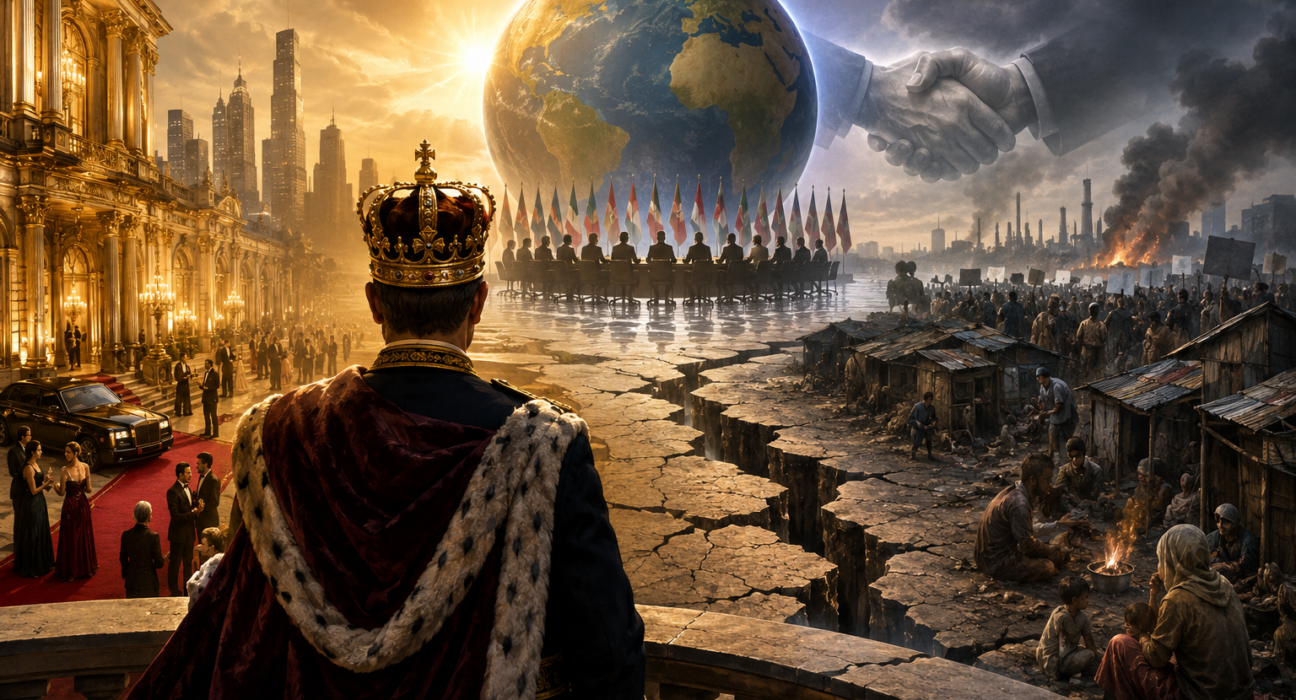
Jacobsen: And so, going back to the regular style of commentary, how do you think the vices of leaders fit into this? We talked about the leader and royal family of Eswatini, and about purchasing, wastefulness, and extravagance. You see this in Europe with the British royal family as well, with extravagant weddings that hundreds of millions of people watch. For many people, it is genuinely entertainment, across a wide spectrum of society.
Do you think there is a limit to the ostentatious extravagance, wastefulness, and abundance-signalling that the richest people with political power can display? Or can those vices, as they are often seen, have no real limits?
Tsukerman: Is the spending worth it? What I mean is this: are royal families in Britain, Eswatini, or anywhere else bringing in enough tourism and investing enough in society to justify the occasional extravagant event, family jewels, and so forth? If the level of tourism and investment they attract compensates for what they spend personally, then I do not see it as fundamentally different from any other expenditure in a business, where you put something out in order to bring something back in.
On the other hand, if all of it is only about leisure and self-indulgence, and if there is no actual investment in society, then it is entirely different. If it is just about power, control, and self-aggrandizement, then, of course, it will backfire and undermine society instead of building it up.
Interestingly, in the United Kingdom, the model of aristocracy—not only the monarchy, but the wider aristocratic structure—has traditionally involved a working relationship between people. The proprietor of an estate invests in giving jobs to people. That person is an employer and is supposed to watch out for the well-being of the community under his or her supervision, so to speak.
So there is a social contract and an implied social responsibility. I am not saying the guardrails always function perfectly, or that many aristocratic families have not mismanaged their own finances and therefore cannot be all that helpful to anyone else. That is also unquestionable. But the aspirational model is not simply a one-way ticket to self-enrichment and spending. It is very much a relationship with the rest of society.
Ideally, any leader in any situation would look at the position the same way. Are they investing in the people around them? Are they improving lives for others? Or is it only about their own power, status, wealth, virtue signalling, and enrichment signalling?
I see a real contrast between the British royal family, where members are generally expected to perform philanthropic and social functions, and where male members have often been expected to serve in the military or provide a life of service, and the Trump administration, where many figures appear to evade even the basic responsibilities expected of public officials.
Even though they are not actual royalty or landed aristocracy inheriting their wealth, they behave in a very entitled way. They appear to see spending as a personal right rather than as part of the responsibility of governing effectively and investing in the United States and in the lives of the voters who elected them. So I see a deterioration of the social contract between the U.S. government and the public at this point.
This kind of profligate spending is very much about elitism and feeling superior. It is not about investment in society or bringing wealth into the public good.
Jacobsen: Thank you very much for the opportunity and your time, Irina.
Scott Douglas Jacobsen is a contributor to The Washington Outsider. He is the Founder and Publisher of In-Sight Publishing (ISBN: 978–1–0692343; 978–1–0673505) and Editor-in-Chief of In-Sight: Interviews (ISSN: 2369–6885). He writes for International Policy Digest (ISSN: 2332–9416), The Humanist (Print: ISSN, 0018–7399; Online: ISSN, 2163–3576), Basic Income Earth Network (UK Registered Charity 1177066), Humanist Perspectives (ISSN: 1719–6337), A Further Inquiry (SubStack), Vocal, Medium, The Good Men Project, The New Enlightenment Project, The Washington Outsider, rabble.ca, and other media. His bibliography index can be found via the Jacobsen Bank at In-Sight Publishing comprised of more than 10,000 articles, interviews, and republications, in more than 200 outlets. He has served in national and international leadership roles within humanist and media organizations, held several academic fellowships, and currently serves on several boards. He is a member in good standing in numerous media organizations, including the Canadian Association of Journalists, PEN Canada (CRA: 88916 2541 RR0001), Reporters Without Borders (SIREN: 343 684 221/SIRET: 343 684 221 00041/EIN: 20–0708028), and others.