
by Scott Douglas Jacobsen
How does Serhii Pager explain the gap between legal quality and legal application in Ukraine?
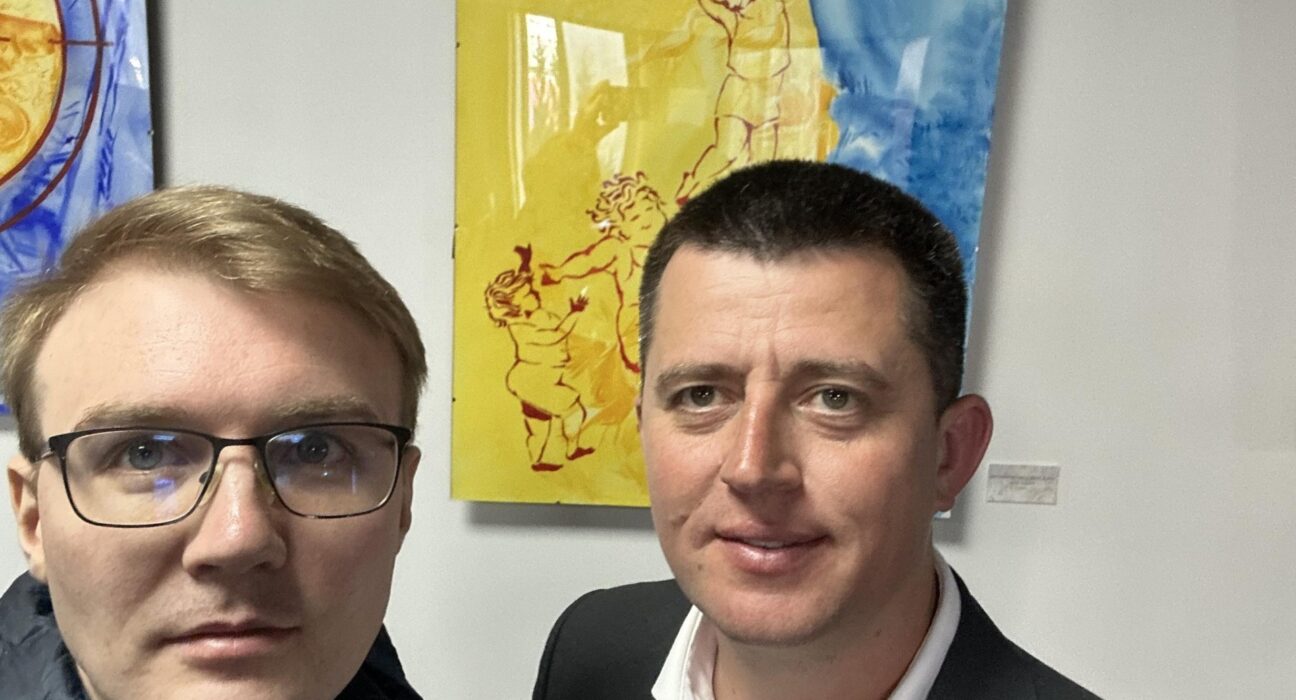
Serhii Pager is a Ukrainian lawyer and founder of a Kyiv-based legal practice focused on civil, commercial, and emerging wartime legal needs. With a background in business law, Pager has shifted toward supporting military personnel, veterans, and civilians affected by Russia’s invasion of Ukraine. He advocates for preventive legal culture, public legal education, and accessible legal services. Pager also organizes interdisciplinary events connecting municipalities, NGOs, and professionals to strengthen legal awareness and civic resilience.
In this interview, Scott Douglas Jacobsen speaks with Serhii Pager about legal culture and access in Ukraine. Pager argues that Ukrainian law is structurally sound but poorly applied, with low public awareness limiting its effectiveness. He emphasizes preventive legal consultation, education in schools, and expanded access to services. Drawing contrasts with European and American systems, Pager highlights the need to shift from reactive to proactive legal behavior, particularly amid wartime pressures on veterans, civilians, and institutions.
Scott Douglas Jacobsen: What was the original idea for the event? My understanding is that you wanted to keep it smaller and more intimate.
Sergii Pager: Yes. This was our first event, so it began as a small idea. The main goal was to bring together municipalities, NGOs, and other partners.
We wanted to provide legal support and help build a culture of legal awareness, so that people understand that they have rights and know when to seek legal help.
Jacobsen: You mentioned during the event that every family should have its own lawyer. What did you mean by that?
Pager: Every family, every individual, and every business should have access to legal support. If people know their rights, they can prevent many problems before they happen.
In Ukraine, many people now need legal support because of the war, especially military personnel, veterans, and their families. Five years ago, my main practice was business and commercial law. Now, life has changed, and the needs of society have changed with it.
Jacobsen: Do you see this becoming more important as Ukraine moves closer to European integration?
Pager: Yes. I have visited the United States and many European countries, and I saw a different legal culture there. People consult lawyers, doctors, and psychologists before a crisis happens, not only after something goes wrong.
Jacobsen: So the idea is preventive support rather than emergency support?
Pager: Exactly. In many economically developed countries, people seek professional advice in advance. I think Ukraine can develop this culture too.
But we need to speak about it openly and explain it to people. In Ukraine, many people still think that if someone has a lawyer, it means there is already a serious problem. We want to change that idea.
A lawyer should not only appear after a problem begins. A lawyer should help prevent problems before they happen.
Jacobsen: In the future, do you see a model where people pay for consultations in advance, so they understand potential legal issues before they arise?
Pager: Yes, that is the idea. People should pay for consultations before something happens, so they understand what risks may arise in the future.
At the moment, however, we are working largely on a pro bono basis. We provide consultations and initial document analysis for military personnel. That is why we cooperate with municipalities and other partners. For veterans, these services are free.
In many cases, after consultation, people understand their situation and are able to resolve their issues.
Jacobsen: Why do you think the culture tends to react to problems rather than prevent them?
Pager: I think it is historical. This situation exists in many countries that were part of the Soviet Union.
If you look at countries like the United States or England, they have long legal traditions. People there use legal systems regularly as part of everyday life.
In our case, we are still developing this culture. Our systems are newer, and we are also dealing with the pressures of war.
Jacobsen: What are the key problems that can realistically be addressed first, even if broader cultural change is difficult?
Pager: First, some changes must happen at the state level. Legal systems need to be implemented clearly and consistently so that people can access them.
We also need to improve access to legal services.
Jacobsen: So both institutional reform and cultural change are necessary?
Pager: Yes. Change needs to happen at the government level, but it also affects how people think. Over time, this shapes the broader culture.
Jacobsen: Given that it has only been about a generation since the collapse of the Soviet Union, where do you see the starting point? What is the first thread to pull to begin meaningful change?
Pager: We need to begin by improving access and awareness. People must understand that legal support is not only for emergencies.
If we can encourage people to seek advice earlier, as they do in more developed systems, we can gradually build a stronger and more preventive legal culture.
Jacobsen: In general, how would you assess the quality of Ukrainian law today?
Pager: In general, we have good laws. The quality of the law itself is strong. However, the main problem is how the law is applied. It exists on paper, but in practice, it often does not work as intended. At the same time, many people simply do not know the law.
Jacobsen: So the issue is both implementation and public awareness?
Pager: Yes. In my opinion, one of the main problems is that many people in Ukraine do not know the rules, do not understand the law, and do not know how to use it.
If you do not know the law, you cannot use it.
I think this comes partly from the Soviet past—a culture of keeping quiet, staying invisible, and avoiding attention in order to avoid problems.
Jacobsen: So a kind of inherited caution or passivity?
Pager: Yes, exactly. That mindset still affects how people behave today.
Jacobsen: What would you change first to address this?
Pager: I believe we need to introduce basic legal and financial education in schools. Students learn many subjects, e.g., history, geography, mathematics, but they are not taught the basics of law or finance. That is a serious gap.
Jacobsen: How does that gap affect people later in life?
Pager: You can see it in business. Many people start a business, invest money, and never seek legal or financial advice. They rely on information from the internet and make avoidable mistakes.
For example, they open a café or a small business without understanding the legal structure, licensing requirements, or accounting obligations. They only discover these problems later.
Jacobsen: So the problem is that guidance comes too late?
Pager: Yes. People act first and only later realize they needed a lawyer, an accountant, or proper documentation.
There has not been a clear, universal culture of seeking professional guidance before starting a business.
Jacobsen: Is that beginning to change?
Pager: Yes, gradually. The state has introduced new digital services and platforms in recent years, including tools through Diia, which help people access information and services more easily. So it is not correct to say that the state is doing nothing. There has been progress.
Jacobsen: Then what is still missing?
Pager: People also need to take initiative. The state can provide tools, but change will happen faster if individuals actively seek knowledge and support.
Jacobsen: There seems to be a broader implication here – that if people do not understand the law, it becomes more symbolic than practical.
Pager: Yes, that is true. If people do not know the law, they cannot rely on it. For the law to function properly, people must understand it and be able to use it in their daily lives.
Jacobsen: There seems to be a cultural tendency toward staying quiet and avoiding problems rather than asserting one’s rights. How does that affect the use of law?
Pager: Yes, there is a cultural tendency to remain quiet and not stand out, in order to avoid problems. As a result, the law formally exists for people, but in practice, they are often afraid to use it. The main issue is not the quality of the law itself, but its application.
Jacobsen: So the problem is not only institutional, but behavioral?
Pager: Exactly. People may have access to legal resources, but they do not use them. Even when programs are available, they are often underused.
The real measure of how effective a legal system is lies in how much it is actually used and whether cases are brought to resolution.
Jacobsen: So practical use is the true indicator of legal strength?
Pager: Yes. The level of law in a country can be judged by how consistently it is applied and whether legal processes reach a final outcome.
Jacobsen: How has Ukraine’s legal system evolved in comparison to Russia’s over the past several years of war?
Pager: Ukraine and Russia both belong to the continental, or Roman–Germanic, legal tradition. This is also the case in countries such as Moldova, Poland, and Belarus. So the legal foundations are similar.
However, since the war, all cooperation between Ukraine and Russia in the legal sphere has stopped. Previously, there were agreements and exchanges of information, but these have been cancelled.
Jacobsen: So structurally similar, but politically and institutionally separated?
Pager: Yes. The legal systems share a historical foundation, but they are now completely separate in practice.
Jacobsen: Looking ahead, how do you see your initiative developing?
Pager: This is our first experience, so we are still searching for the right format. We are looking to involve more people and more organizations.
We are also identifying key problems and bringing them into the discussion so that we can work toward solutions together.
At the moment, we are signing agreements with partner organizations and developing cooperation. Over time, we will see how this evolves.
Jacobsen: Thank you very much for the opportunity and your time, Sergii.