
by Giovanni Giacalone
The judicial battle on the Hamas network in Italy and the threats to journalists raise serious questions
The issue involving the Italy-based Hamas-linked network and its leader, the Palestinian preacher Mohammad Hannoun, has already been extensively covered by the Washington Outsider in the past two years. However, the latest judicial developments raised serious concerns regarding the trial and beyond, as some Italian MPs said that the decision puts Italy’s national security at stake.
As explained by the Italian daily newspaper Il Giornale, which has been constantly and closely following Hannoun’s case, on April 8 the Court of Cassation issued its ruling on the appeals filed by the Genoa prosecutor’s office and the defense team in the investigation into the Hamas movement in Italy, which involves Hannoun, currently detained in the maximum security prison in Terni on charges of being the leader of the terrorist organization in Italy. All the prosecutor’s appeals against the releases were declared inadmissible. The prosecutor had challenged the Court of Review’s decision to order the release of Raed Al Salahat and Khalil Abu Deiah, the legal representative of the La Cupola d’Oro association.
All the defense team’s appeals were upheld, with the case being remanded to Genoa for a new trial. A new section of the Court of Review will have ten days to reexamine the case after the Cassation’s ruling motivations are made public, and therefore decide whether the four individuals currently in prison should be released or not. Hannoun and three of his associates (Raed Daoud, Riyadh al-Bustanji, and Yaser Alisaly) are in fact currently still in prison.
As explained by Giulia Sorrentino, leading-journalist in the case, the investigation involves over 25 individuals, but precautionary measures were only implemented for seven of them, as the Prosecutor’s Office identified a risk of repeat offenses or flight, as in the case of Hannoun, who had everything ready, including flights, to travel to Turkey, specifically Istanbul, where he also owns an apartment. It is yet unclear who had warned Hannoun about the imminent arrest.
The investigation has revealed distinct, consistent elements, all consistent and pertaining to the violation of Article 270 bis of the Criminal Code: the associates fully share Hamas’s terrorist and anti-Semitic ideology, its long-term strategic plan for over twenty years, its individual political and military initiatives, and all terrorist activity, including that directed against civilians. They maintain direct contact, both by telephone and in person, with high-ranking Hamas figures around the world. The investigation revealed direct contacts with: Ismail Haniyeh (former Hamas leader who died in 2024) and Khaled Meshal, one of the organization’s leaders, but also Kamel Abu Madi, Zaher Jabarin, and Majed Al Zeer. They sent millions of euros to Hamas because, according to the prosecution, they all belong to Hamas.
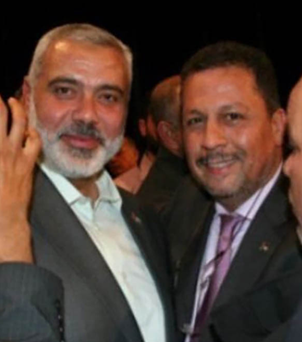
Figure 1 Mohammad Hannoun (right) next to Ismail Hanieh
The US sanctions on Hannoun and his network
On October 7th, 2024, the US Department of the Treasury’s Office of Foreign Assets Control (OFAC) designated three individuals and one sham charity that are prominent international financial supporters of Hamas, as well as one Hamas-controlled financial institution in Gaza.
Among the sanctioned individuals is Hannoun, who has been indicated by Washington as: “an Italy-based Hamas member who established the Charity Association of Solidarity with the Palestinian People, or Associazione Benefica di Solidarietà con il Popolo Palestinese (ABSPP), a sham charity in Italy which ostensibly raises funds for humanitarian purposes, but in reality helps bankroll Hamas’s military wing. As an executive at ABSPP, Hannoun has sent money to Hamas-controlled organizations since at least 2018. He has solicited funding for Hamas with senior Hamas officials and sent at least $4 million to Hamas over a 10-year period”.
In June 2025, the US Department of Treasury once again sanctioned Hannoun and another of his associations, as explained in OFAC’s press release:
“The Italy-based Associazione Benefica La Cupola d’Oro (La Cupola d’Oro), was established by U.S. sanctioned individual Mohammad Hannoun (Hannoun), who publicly promoted the charity and used it to continue evading sanctions and raising revenue for the Hamas military wing through donors, many of whom were unwitting of the links to Hamas. On October 7, 2024, Treasury designated Hannoun for having materially assisted, sponsored, or provided financial, material, or technological support for, or goods or services in support of, Hamas. La Cupola d’Oro, like Charity Association of Solidarity with the Palestinian People, also designated by OFAC on October 7, 2024, is a sham charity established to support Hamas.”
During a pro-Palestinian street demonstration held in Milan in August 2025 (four months before his arrest which occurred on December 27, 2025), Hannoun attacked the US Treasury Department, calling the accusations “lies”.
Hannoun and Hamas
Hannoun’s support for Hamas has been widely documented. On October 11th, 2023, just three days after the October 7th massacre, while being interviewed by the Italian national TV station Rai3, Hannoun claimed that “Hamas’ attack is self-defense”; without any hesitation or concern that such a statement would go public.
On January 4th, Hannoun used his personal Facebook account to glorify Yahya Ayyash, Hamas’ notorious bombmaker (sadly known for both developing Hamas’s use of suicide bombings and building many of the explosives used in attacks), and Saleh al-Arouri, a senior Hamas leader in Lebanon who died in a drone strike on January 2nd, 2024.
On November 9, 2024, during a speech in Milan, Hannoun, praised the perpetrators of the “Jew-hunt” that took place in Amsterdam on November 7th, when Islamist thugs attacked the Maccabi Tel Aviv fans after the game against Ajax. The Italian authorities responded with a lenient sanction banning the preacher from entering Milan for six months.
Hannoun was also photographed on multiple occasions next to Hamas leaders Ismail Haniyeh and Khaled Meshaal while his associates Raed Daoud and Salameh Abu Rawwa were pictured inside underground tunnels in Gaza.
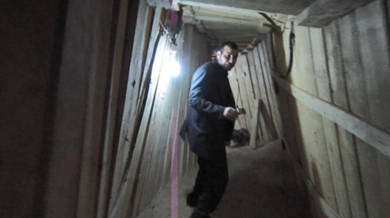
Figure 2 Abu Rawwa inside a tunnel underneath Gaza
As explained by former Italian foreign intelligence officer, Marco Mancini: “anyone who enters the tunnels is a Hamas fighter. There are no exceptions. The tunnels are Hamas’s nervous system, without which the organization would not survive. Access is reserved exclusively for its members.”
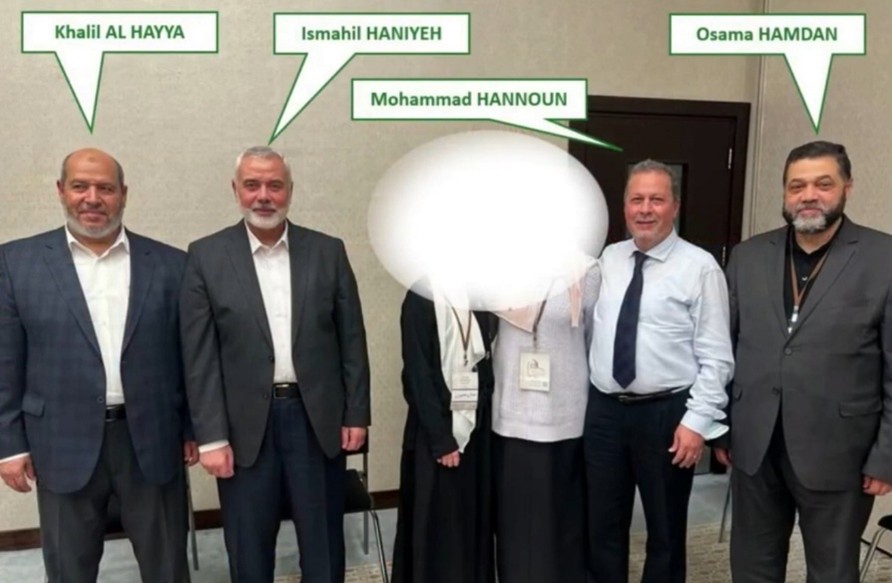
Figure 3 Mohammad Hannoun with the Hamas leadership
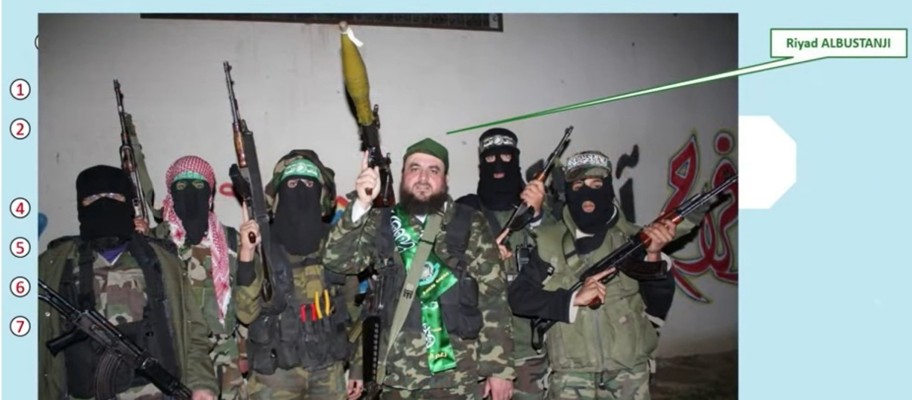
Figure 4 Riyadh al Bustanji holding an RPG next to Hamas members
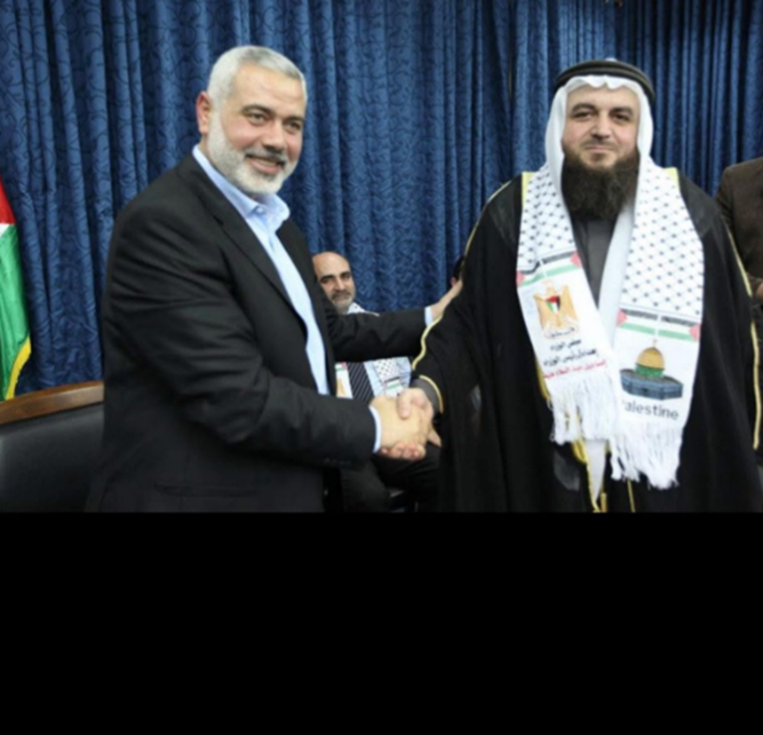
Figure 5 Riyadh al Bustanji shaking hands with Ismail Hanieh
The charity money used to purchase apartments
After examining the thousands of legal papers pages documenting the case, Il Giornale also revealed that the money collected by Hannoun’s associations was allegedly used to buy apartments (over 80 properties): “Yaser Elsaly, the manager of the Milan branch of Abspp (Hannoun’s association), claims that they used the orphans’ money to buy an apartment for €170,000: “In Elsaly’s wiretapped conversations, one clearly hears references to funds that should be earmarked for innocent children, but which instead are being diverted to provide headquarters or housing for the association’s members.”
In another conversation dated March 22, 2024, Hannoun’s close associate, Raed Dawoud, said: “A truckload of rice alone costs $130,000, and then you show up and tell me it’s none of your business? I’ll give you what you ask for, it’s no problem for me. The important thing for me is that this merchandise arrives at the Rafah crossing, that it enters, and that it reaches the north… even if they steal it in Gaza, I don’t care, the important thing is that it enters.”
On another occasion, Hannoun sent a vocal message to one of his associates abroad asking him to make a video with children thanking the ABSPP (sanctioned by the US DOT OFAC) for the aid received.
Il Giornale’s question is legitimate: “Therefore, the purpose wasn’t to feed the children who were reduced to emotional posts and videos on social media?
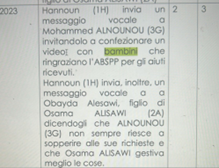
Figure 6 The transcription of the conversation where Hannoun asks for a video showing children thanking ABSPP
The threats to Il Giornale and Hannoun’s supporters cheering the judges’ decision
As the decision is remanded to a new section of Genoa’s Court of Review, Hannoun’s supporters are already celebrating, almost taking for granted that Hannoun and his three associates will all be released soon, therefore raising an obvious question, what makes them so confident in the potential outcome?
For instance, on Saturday April 11, during a demonstration outside Milan’s headquarter of one of Hannoun’s associations, some of Hannoun’s supporters posed in a photo that was later published by the Instagram account of the Association of Palestinians in Italy-API (also led by Hannoun) with the message “They failed…And we will be back soon and stronger”.
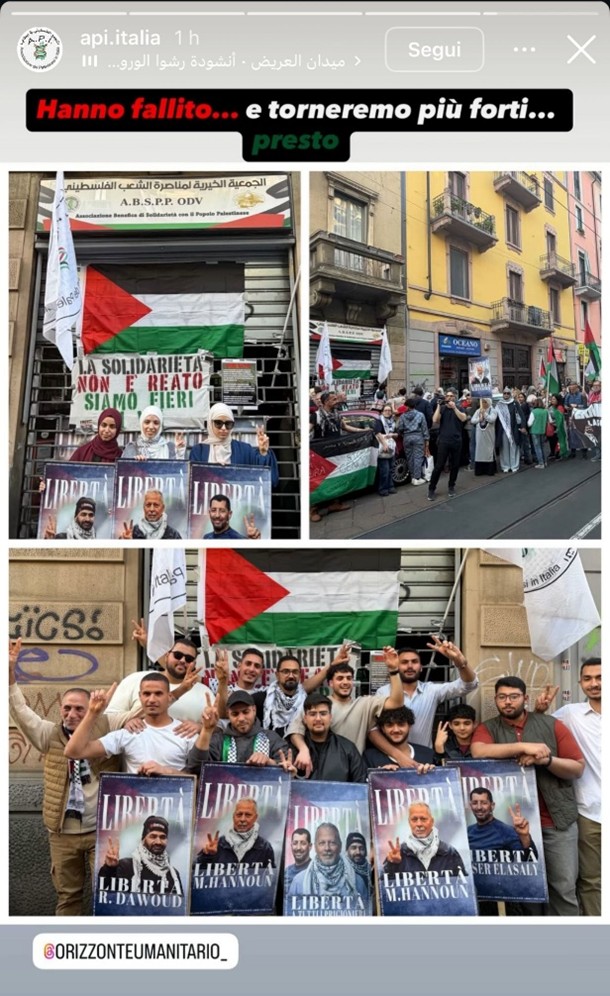
Figure 7 The quoted message posted by API
A few days earlier Amir Abdal Jawad, another associate of Hannoun who had been selected as representative for yet another of Hannoun’s associations to collect money and named Associazione La Palma (The Palm Association), founded to circumvent account closures resulting from US Treasury Department sanctions, posted a very meaningful message to Il Giornale and Giulia Sorrentino:
“I really hope to see the look on your face and that of your Nazi friends, after all your evidence has been discarded. I’ll suggest a way to capitalize on these people and the pages of your newspapers: they could be useful for wiping their asses.”
Abdel Jawad also attached the post in which API (Hannoun’s association) explains how positive the Consulta’s opinion was for them.
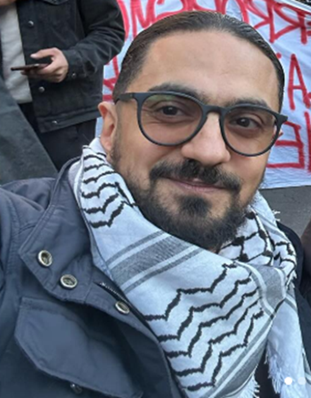
Figure 8 Amir Abdali Jawad
The case saw an immediate reaction from the Fratelli d’Italia (Brothers of Italy) MP, Sara Kelany, who has also been following Hannoun’s case for years: “While we await the reasons for this sentence, we are concerned about the implications for national security of these individuals’ release, given their extremist attitudes and obvious ties to Islamist terrorism. Following the sentence, the first threats have already arrived against the newspaper Il Giornale, which has always closely followed this case: we express our solidarity with the director Cerno and the journalist Sorrentino, who have been the target of insults from an activist close to Hannoun.”
Another intervention came from Forza Italia Senator Maurizio Gasparri: “The dangerous supporters of Hamas have returned to the forefront, this time threatening journalists and freedom of information.”
The connection to the Justice referendum
Il Giornale’s chief editor, Tommaso Cerno, has no doubts, as he explained in a video: “During the referendum, we reported that Islamists urged voters to vote “no” and, in exchange, the judges would help them with the sentences they were interested in. Here’s the first proof: the annulment of Hannoun’s arrest.”
Cerno is referring to the March 22/23 justice reform referendum when Italian voters were asked to approve changes to how judges and prosecutors are governed and disciplined, including separating their career paths and reshaping oversight bodies. The final outcome saw a 53.74 percent of people opposing Meloni’s proposed reforms, with 46.26 percent supporting them.
Many judges, especially those belonging to the left wing, opposed the reform. The pre-election phase was characterized by a highly aggressive campaign by several Islamic preachers active in the pro-Palestinian area, who urged voters from the Islamic community to vote “no,” turning the referendum into a battle against Meloni for (what they claimed) support for Israel.
One of the most active, Moroccan Brahim Baya, even showed a photo of himself signing the “no” vote in the voting booth while displaying a pro-Palestine armband, thus breaking the law as it is forbidden to publicly display one’s vote. The same individual was photographed in a square in Turin, microphone in hand, next to an American flag trampled on the ground.
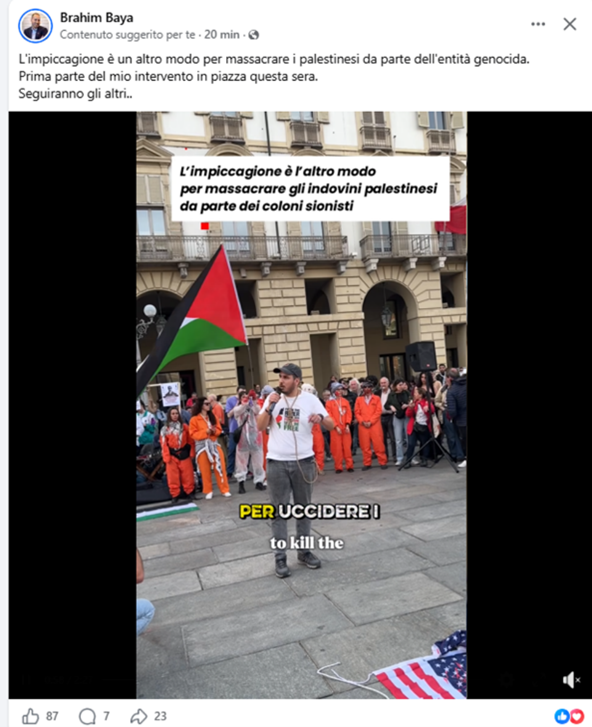
Figure 9 Brahim Baya next to the trampled US flag in Turin
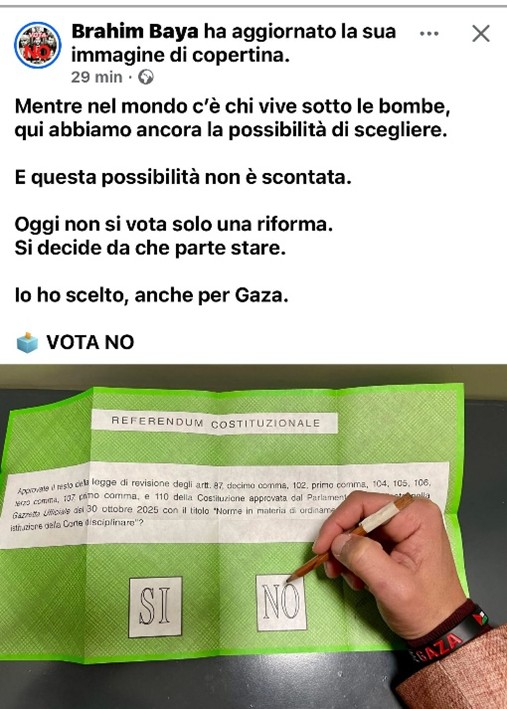
Figure 10 Brahim Baya’s photo showing his vote
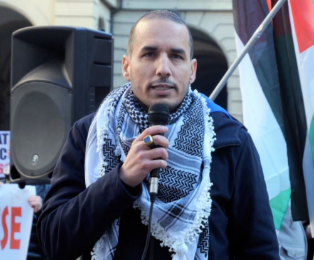
Figure 11 Brahim Baya during a pro-Palestinian demonstration
Hannoun’s past financial issues
Hannoun’s unusual funding activities were already well-known to Italian authorities. In December of 2021, after several reports to the Anti-Money Laundering Office, Unicredit Bank suspended operations on the accounts of the ABSPP, which also has offices in Milan and Rome, due to a series of anomalies. From failure to register in the Revenue Agency register to the massive movement of cash, in some cases to subjects registered on the blacklists of European databases. However, according to the Italian media, the indictment that was launched by the judicial office did not lead anywhere due to the lack of verifiable elements in the Palestinian territories.
Moreover, in August 2022, an investigative report published by OFCS Report, an Italian observatory with expertise in national and international security, exposed a series of political connections regarding Hannoun, on a national and international level, including photos of him next to Hamas leaders Ismail Haniyeh and Khaled Meshaal.
In July 0f 2023, the Israeli Ministry of Defense asked the Italian police to seize Hannoun’s money. From the investigation conducted by the Shin Bet, Israel’s domestic intelligence agency, it emerged that 500 thousand euros were available to the architect who in the past was accused by Israel, without any criminal repercussions, of hiding financial support to Palestinian suicide bombers.
These funds, according to the Israeli Ministry of Defense, are “the property of, or in any case a reward for, a terrorist organization.” Therefore, “they must be seized”. As explained by the Italian news site Il Sussidiario news site, over the years, and on several occasions, the Italian intelligence services received reports of strange movements of Mohammad Hannoun’s associations, in particular of money.
There are at least two aspects worth highlighting: firstly, the years-long duration of the Hannoun network’s activity in Italy, despite frequent reports, and the difficulty in containing it despite the substantial amount of evidence provided.
Considering that Hamas is classified by the European Union as a terrorist organization, just like al-Qaeda and ISIS, it is astonishing that the Hannoun network continues to somehow remain afloat.
Secondly, the Italian justice system has proven far more swift and efficient in dealing with cases involving ISIS supporters, which raises many questions as to why the same hasn’t happened with Hamas. It might be useful to ask a final question: what would have happened if everything that emerged about Hannoun and his associates’ network had been done in the name of ISIS? Would the legal battle still be ongoing?