
by Giovanni Giacalone
The Middle East is in turmoil as the Kurds in the north-east of Syria are being massacred by al-Jolani’s jihadists while prisoners belonging to ISIS are escaping from prisons. In Gaza, Hamas is rebuilding its forces and gathering weapons for a new offensive against Israel. In Lebanon, Hezbollah did not disarm and Israel is being forced to take care of it. In Iran, the anti-regime demonstrators have been slaughtered with all sorts of weaponry while waiting for the help that Trump promised and never sent.
However, during his speech in Davos, Trump claimed that there is now peace in the Middle East and, obviously, thanks to him:
“I think we have peace in the Middle East. There are some little situations like Hamas… we’re going to know over the next 2 or 3 days, certainly over the next 3 weeks, whether or not they’re going to [disarm]. If they don’t do it, they’ll be blown away very quickly.”
From these statements, it is clear that Trump has a surreal vision of the situation in the Middle East, far removed from reality and much closer to what he wishes to see.
It’s unclear what Trump is referring to when he talks about “little situations,” but it’s puzzling that one of them is Hamas.
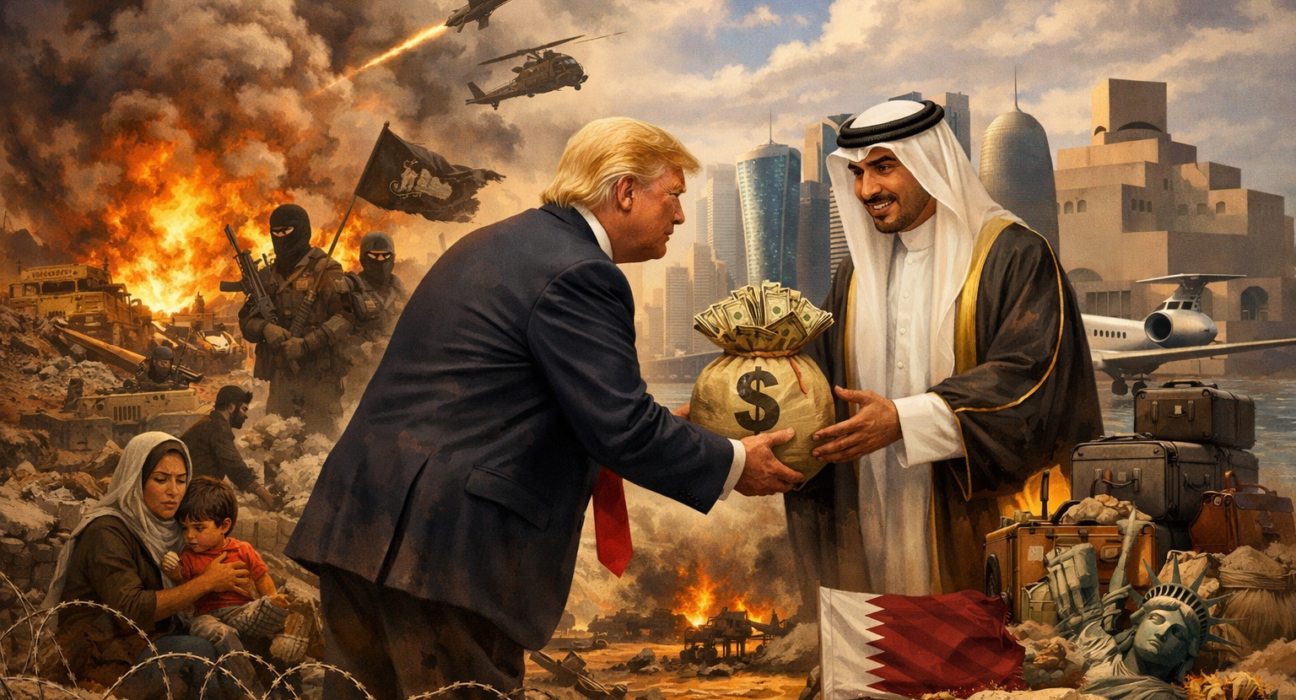
This situation is so “little” that the last dead body still hasn’t been returned to Israel, theoretically making it impossible for the so-called “Peace Plan” to move forward with the second phase. Theoretically, because Trump is still pushing ahead with it, regardless of Hamas not fully complying with the requirements. As if it were not enough, the two major Sunni Hamas sponsors, Turkey and Qatar, have been invited by the US president to be part of the key Gaza committee set to oversee the Strip’s postwar management, regardless of the fact that Israel had been very clear on their exclusion.
According to Israeli PM Benjamin Netanyahu, the Israeli government was reportedly kept in the dark about the decision. Consequently, Netanyahu, made the point clear once again, stating that Turkey and Qatar, both countries that are hostile to Israel, will not “have any authority or any influence” in the various bodies set up by Trump’s administration to run postwar Gaza.
The problem is serious, as Trump has already demonstrated several times that he isn’t too concerned about Israel’s security needs, forcing Jerusalem to make unfavorable deals with Hamas and halting the Israeli offensive against Tehran during the Twelve-Day War, thus saving the Iranian regime from collapse.
What about the Israeli raid in Qatar last June to eliminate the Hamas leadership? The attack failed because someone apparently warned Doha shortly beforehand, allowing the terrorist leaders to escape. Trump was furious about the raid and forced Netanyahu to publicly apologize with a phone call to Emir al-Thani.
What can we expect from Trump on Gaza? Netanyahu cannot politically afford to allow Turkey and Qatar into the board, nor can he accept Hamas to remain in Gaza. Considering that Trump has so far been far more concerned about Qatar’s satisfaction and Hamas already said that it won’t give up its weapons, it is very likely that the US President will once again try to force Israel to accept the unacceptable. The question is: what will Netanyahu do?
Then we come to the Iranian issue, probably the biggest foreign policy fiasco ever accomplished by an American administration, perhaps worse than the Bay of Pigs disaster. The people of Iran have been literally betrayed by Trump who incited them, promised help and then turned away.
In fact, on January 9, Trump claimed that his administration would “hit Iran very, very hard where it hurts” if the Islamic Republic murdered the demonstrators. On January 13, Trump once again spurred the demonstrators to keep protesting and take over the institutions as “help was on the way”.
However, that help never came, at least 12000 demonstrators were slaughtered, the regime is still standing and fiercer than ever due to its being in survival mode.
Trump even praised the regime, saying that he greatly appreciated the fact that the regime decided not to execute the over 800 demonstrators the following day.
Why did Trump believe the regime? Reportedly, because special envoy Steven Witkoff told him so, after receiving a message from the Iranian Foreign Minister Abbas Araghchi.
Steven Witkoff, the same one who had “a moment of emotional connection” with Hamas leader, Khalil al-Hayya, in October 2025, and who put his hand on his heart while shaking hands with Putin in Moscow.
Witkoff, who claimed that the Trump administration prefers a diplomatic resolution to the Iranian tensions, rather than a military one, is also known to have business ties with Doha to the extent that the US and Israeli media have raised concerns of a potential conflict of interest.
Moreover, pressure from Arab countries such as Qatar, Saudi Arabia, Oman, and Egypt most likely also persuaded Trump to reconsider his position. He subsequently informed Iran that he was not interested in launching an attack.
However, information emerging from within Iran presents a very different picture. The killings continued, while injured demonstrators, and even the doctors treating them, were forcibly removed from medical facilities and disappeared. At the same time, the regime has been hunting down anyone attempting to circumvent the internet blackout, fearing that videos documenting the atrocities might reach the outside world.
So far, the outcome of the Iranian crisis has been disastrous for Washington. Trump will likely be remembered as the president who first encouraged, and then abandoned, Iranian demonstrators who were ultimately slaughtered by the regime. This represents a devastating blow to both Trump’s personal reputation and his administration.
Although Trump could still decide to launch an attack on Iran, even one that goes beyond a limited symbolic action, the damage has already been done and is now indelible.
The only way Trump could attempt to remedy this situation would be to intervene militarily in support of the protesters and help them overthrow the regime. However, such a course of action would conflict with the interests of his close Gulf ally, Qatar, which fears the potential collapse of the Iranian regime with which it actively cooperates.
Regarding the Gaza issue, the fact that Trump pushed for Qatar’s inclusion on the Peace Board and proceeded without informing Israel speaks for itself.