
by Scott Douglas Jacobsen and Irina Tsukerman
How do U.S. foreign policy shifts and leadership dynamics affect NATO cohesion, Middle Eastern alliances, and China’s strategic positioning?
Irina Tsukerman is a human rights and national security attorney based in New York and Connecticut. She earned her Bachelor of Arts in National and Intercultural Studies and Middle East Studies from Fordham University in 2006, followed by a Juris Doctor from Fordham University School of Law in 2009. She operates a boutique national security law practice. She serves as President of Scarab Rising, Inc., a media and security strategic advisory firm. Additionally, she is the Editor-in-Chief of The Washington Outsider, which focuses on foreign policy, geopolitics, security, and human rights. She is actively involved in several professional organizations, including the American Bar Association’s Energy, Environment, and Science and Technology Sections, where she serves as Program Vice Chair in the Oil and Gas Committee. She is also a member of the New York City Bar Association. She serves on the Middle East and North Africa Affairs Committee and affiliates with the Foreign and Comparative Law Committee.
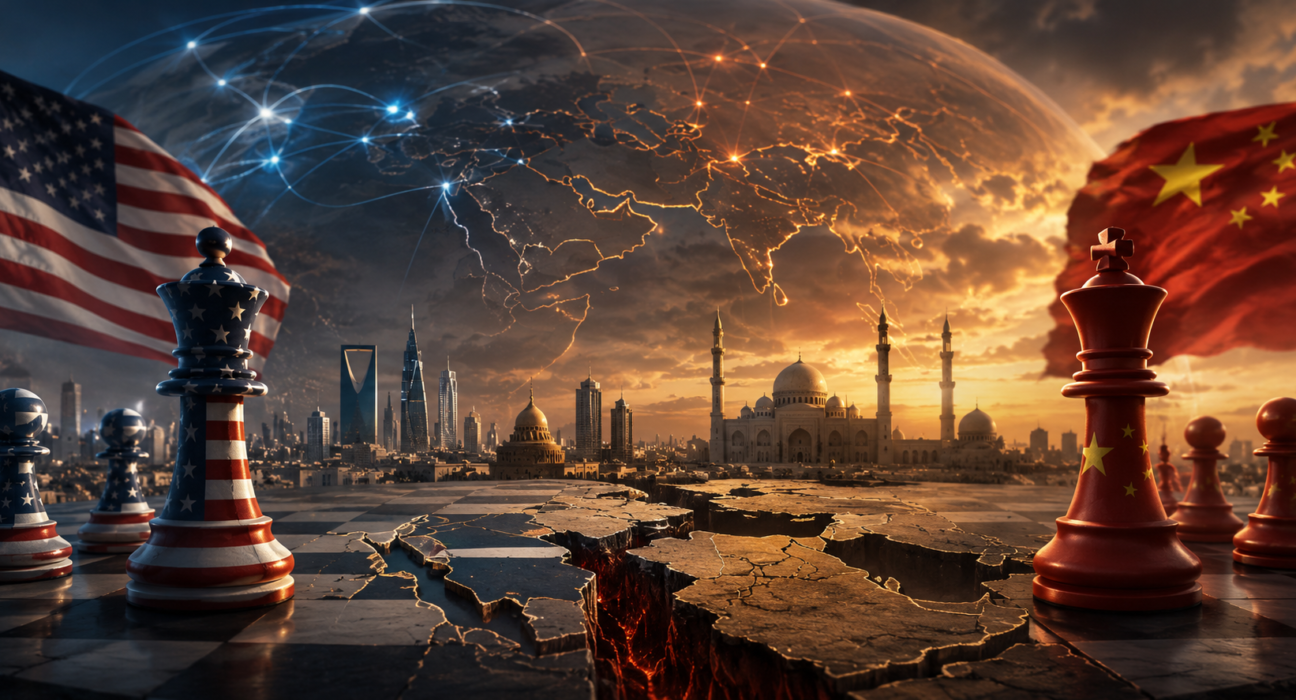
In this interview, Scott Douglas Jacobsen speaks with Irina Tsukerman on shifting global alliances amid U.S. foreign policy volatility. They examine NATO’s resilience despite internal strain, contrasting it with fragile Middle Eastern partnerships. Tsukerman highlights leadership age, populism, and institutional inertia, while emphasizing China’s expanding economic influence and strategic patience. The discussion underscores declining trust, emerging “mini-blocs,” and the limits of replacing NATO, portraying a fluid, uncertain geopolitical landscape shaped by competing powers and evolving commitments.
Scott Douglas Jacobsen: There has been a great deal of discussion about whether US operations are badly straining NATO and Five Eyes in Iran on the one hand, and whether the US and Gulf states are being permanently disillusioned with one another, or whether all of it is a matter of a Trumpian approach to foreign policy and finances that will dissipate as soon as he leaves office and somebody else takes over. Recent reporting suggests a serious strain, but not a formal breakup. It is a mixture of both. What about the advanced age of these significant leaders?
Irina Tsukerman: Most populous countries do have older male leaders. All of the privileges of a modern society that one can ask for, these men have had themselves. So they are likely to live a full, slightly above-average lifespan. But they are not immune to the regular effects of decline, particularly as men approach the end of their lives, in terms of their stamina and mental ability to self-regulate emotions and focus on tasks.
Take Trump. In some ways, he is a one-person show, but significantly younger people surround him. Some of them are ideologically aligned with Trump, or even more extreme. JD Vance, for instance, is the vice president and is substantially younger than Trump. Trump was born in 1946, while Vance was born in 1984. Vance has at times aligned his rhetoric with Trump’s broader political line, but he is widely seen as a more ideologically articulated populist than Trump, who tends to be more short-term, pragmatic, and self-interested in style.
At the very least, Trump is trying to fit into a particular part of the American base. While he himself may not have particular convictions in a conventional ideological sense, he is certainly catering to a deeply ingrained set of convictions. So there is a difference in that regard.
Regarding other countries and their leaders, there is a mix. In Europe, the picture is different. Macron is leaving office in May 2027, and he is under 50. Giorgia Meloni, too, is in her late 40s and is a woman.
Yes, Meloni has had to cobble together a coalition of right-wing and conservative forces, and she herself has had a controversial ideological past, but she does not necessarily fit that age pattern. The UK has gone through a variety of male and female leaders with dubious levels of commitment to anything in particular, and that has been a problem.
If you are talking about quasi-authoritarian leaders or leaders moving in that direction, like Orbán, Fico, and Vučić, their age ranges differ. Vučić, born in 1970, is younger than Orbán, born in 1963, and Fico, born in 1964. They would fit that pattern in part, but they are also not necessarily the top decision-makers in the broader Western alliance system.
At the current juncture, it is not always clear what some of these factions represent other than very corrupt or power-oriented political formations, more concerned with holding power than with ideological consistency, even when they cater to a particular subset of people.
So we are seeing a diverse view on things. We also have to separate the leaders making these policies from the popular support for them. Most people still support the idea of NATO and alliances, even if individual decisions, leaders, and their policies have been questioned. Recent reporting suggests the alliance is under visible pressure over Iran and troop issues, but still functioning as a core security framework.
So to some extent, what Trump and a few others are trying to push may sound populist, but it is not necessarily popular in that regard.
Regarding the Middle East, the set of concerns there is different. It is not so much about defence treaties and commitments, but about real commitments in terms of practical value and US commitment to the security of those countries, and whether the US can be trusted to fulfill understandings and whether it is committed to the stability and security of the region and its partners, or whether all of that has been largely for show.
Whether there is any real substance there, although Trump is causing a lot of damage very quickly, the institutional commitments outweigh his personality. There is likely to be a struggle for power inside the US in the next couple of years. It is not clear who will ultimately emerge as the winner, but I think the overwhelming majority of candidates will be committed to some form of NATO and to supporting the transatlantic relationship and engagement. That broad point is still consistent with current reporting, even amid serious alliance strain over the Iran war.
I am not similarly convinced regarding the Middle Eastern relationships, except in Israel. I think overwhelmingly there will also be support for continued and deepened military and other engagement with Israel.
The reasons for that are twofold. Many Republicans have been quite skeptical of Gulf states for a very long time, aside from some limited trade engagements, and there has been an up-and-down pattern since Obama. George W. Bush was still quite close to many Gulf partners, but he was heavily criticized for the Iraq War decision, which also led to a reevaluation of those countries’ strategies.
China has been pushing for closer relations. Now that too is being questioned, because China and Russia have been major backers of Iran while also maintaining economic and technological relationships with these countries. They certainly have not put a stop to Iranian attacks on the Gulf states, for instance. Recent attacks on Saudi infrastructure and reported Iranian strikes tied to Gulf targets have only intensified those doubts.
There has been a lot of concern that the Democrats are going to use this as an excuse to put an end to defence support for those countries. Essentially, the current situation has revealed that those countries, despite purchasing vast quantities of top American weapons, are extremely underprepared for a serious crisis, despite years of warnings.
Now, we can talk about who is to blame for that. Obviously, they are at least partially responsible. Some argue that the US has not invested the time to actually teach these countries how to optimize those weapons and fight effectively. Some argue that cultural trends shaping who ends up in the military in the first place are to blame, and that it is not a simple political decision by leaders driven by budget considerations. It is not the same story in every case.
Whatever the case may be, there is a great deal of skepticism about engagement with the Gulf states in general, and military engagement especially.
I think both among Republicans and Democrats, to some extent, Trump was an exception, but he was an exception based on the deals he struck with political elites, and not necessarily because he was deeply invested in more integrated defences or more integrated common security buildup between the US and those countries.
If anything, he damaged the effort to build better popular relations with those states, simply because the optics of his dealings with their leadership have been so one-sided and self-serving. So more damage has been done to the Middle Eastern side of the equation than to the European side, although I do think that, institutionally, many of the things damaged by Trump can be reversed.
A lot of the ingrained trust has been mutually beneficial for Western countries and the US, and many will be willing to restore parts of it. Some things will change. Those countries have determined that, for their own interests, it is better to maintain some level of independence. But do they still value alliances and relationships? I think so.
It is clearly better to have some level of intelligence sharing, common ground in defence integration, and similar cooperation at the institutional level, including through military exercises. That value is easily recognized. But we have never had that level of integration with Middle Eastern states. Even the various military exercises the US has conducted have been relatively uneven compared to the NATO bloc.
The US has designated several Middle Eastern countries as major non-NATO allies. However, ideological and practical divisions persist, over the role of Israel in the region, over which countries should hold that designation, and over those countries’ relationships with Russia and China. There are many obstacles to overcome, and the biggest one is that trust has been severely damaged.
Those non-NATO allies were counting on clearer defence coordination in the event of a regional crisis, and that did not fully materialize. Trump’s inconsistent approach to Iran and limited response to the security concerns of those countries have added to a growing list of grievances regarding fluctuating US foreign policy. That will be much harder to repair than the decades-long, relatively stable relationships with European and other Western countries.
I realize that my answer may be somewhat outside the conventional view, but I have had the advantage of observing defence and other relationships across both blocs, the Middle Eastern and the NATO systems, , and it is there that the differences are most visible.
At the same time, individual leaders can still significantly shift dynamics, especially when operating within strong international institutional frameworks. For example, within the UN Security Council system, even medium powers such as France, under President Macron, can exercise veto power alongside larger states like Russia and China, shaping outcomes in major international decisions.
So not evaluating whether it should be open or closed, but rather how unpredictable some of these dynamics can be. You have contemporary alignments like Russia and China, which have both tensions in some areas and strengths in others. And then you get a wildcard, such as France in this particular case.
France could potentially be one of the biggest beneficiaries of all this, surprisingly, but only potentially. As I said, Macron’s time in office is limited. He is facing a significant deficit of public trust at the domestic level. There is a real possibility that his successor could come from either the far right or the far left. Whatever Macron’s understandings are with the European Union, NATO, or Arab states, it is entirely possible that a successor could reverse course and take France in a very different, Orbán-like direction.
We will see what happens. For now, Macron is acting as if he intends to remain influential for as long as possible. In the immediate future, he is gaining some traction in certain geopolitical spaces. In my opinion, particularly in parts of the Arab world, his posture is being received positively.
He has positioned himself in ways that align with some of their interests, whether in rhetoric concerning the Palestinian issue, his reluctance to become involved in Iran without clearly defined objectives, or his willingness to continue arms sales that have faced scrutiny in the US Congress when directed toward some of those countries.
He has also maintained relatively steady personal relationships with regional leaders, nothing like Trump’s highly personalized style, but without the same degree of rhetorical volatility that has made even some of Trump’s regional counterparts uneasy.
There is also a historical precedent for France playing a role in the security of some of these countries, especially Saudi Arabia. During the 1979 Grand Mosque seizure in Mecca, French assistance, particularly technical and advisory support from French security forces, played a role in helping Saudi authorities resolve the crisis. That episode also contributed to a deeper alignment between the Saudi monarchy and religious authorities.
We may be seeing a partial return to that dynamic. France may not be called upon for anything as dramatic. However, it could increasingly be viewed as an alternative partner, especially in light of perceived US hesitancy, for example, the limited military response to the 2019 attacks on Saudi Aramco, and current concerns among Gulf states about air defence capacity, including shortages of interceptors and broader security guarantees.
France has an interest in preserving its influence and economic ties in the Middle East and may be seen as a useful complement or partial substitute in certain areas. While it maintains trade relations with Iran, it is also perceived as more independent in its regional positioning and, in some contexts, as less closely aligned with Israel than the United States.
At the same time, countries in the region continue to balance relationships with multiple powers. Russia and China are seen as reliable suppliers of military equipment and maintain transactional relationships without deep involvement in internal affairs, which adds another layer of complexity to how alliances are evolving.
Jacobsen: Another country that tends to operate through subtler maneuvers, almost as if guided by a kind of national Sun Tzu strategy, is China. The United States makes large, visible military moves in places like Venezuela, Iran, and Cuba, while also adjusting or reducing support in areas such as Ukraine. China, by contrast, tends to pursue economic interests in the pursuit of quasi-imperial ambitions, often extending loans and investments that can leave smaller powers heavily indebted.
This approach can be seen as extractive, even parasitic, although China also faces significant internal issues, particularly demographic decline and economic imbalances, including a heavily stressed real estate sector.
At the same time, in geopolitical terms, particularly regarding Iran, Chinese foreign policy officials present themselves in a highly controlled and polished manner. Their diplomatic corps is extensive and carefully selected, and they tend to calibrate their messaging precisely. They condemn the United States and Israel, but typically in restrained and diplomatic language.
So it is a form of statecraft that is less overtly belligerent than that of the United States, but also less rooted in the language of self-defence than Ukraine’s position. How do you see that playing into the broader mix?
Tsukerman: China is in a stronger strategic position than Russia in the Middle East, largely because it is deeply integrated into the infrastructure, technology, and business environments of many of those countries. While China does not have a formal defence treaty with Saudi Arabia, it has developed extensive economic, technological, and limited security cooperation ties across the Gulf.
Even as distrust grows over China’s relationship with Iran, disentangling from Chinese contracts, investments, and labour involvement, especially in Saudi Arabia, the UAE, and elsewhere, would be extremely difficult. Countries like Qatar also maintain overlapping engagements, while Russia and China coordinate in areas such as cybersecurity and infrastructure.
So China is not going anywhere anytime soon, although some countries may become more cautious in how they structure future agreements.
Another issue to consider is that Xi Jinping has consolidated power to a greater extent than his immediate predecessors, thereby reducing internal balancing mechanisms within the Chinese leadership. This has raised concerns among some smaller states that have experienced more assertive Chinese policies.
As a result, some countries, such as Saudi Arabia, may increasingly look to diversify their partnerships. That could include limited engagement with European states, continued but more cautious engagement with China, and greater regional cooperation involving actors such as Turkey, Pakistan, Egypt, and other Gulf states, including Qatar.
We may see the emergence of more flexible, issue-based “mini-blocs,” rather than rigid alliances, with different configurations depending on the geopolitical or economic issue at hand.
That said, China is unlikely to be the biggest loser in this environment, at least in the near term. Despite energy concerns and internal challenges, it retains significant leverage. Even if the United States attempts to consolidate its position, particularly depending on the outcome of tensions involving Iran and its regional partners, the current uncertainty makes it too early to draw firm conclusions.
If China continues to act strategically, and if US policy remains inconsistent, with unclear outcomes and limited coordination, then the United States risks losing potential advantages, while China may continue to expand its influence despite its own constraints.
On its own part, it will be able to hold its position in the region.
By the way, Giorgia Meloni is engaging with Gulf partners, including Saudi Arabia. This comes amid recent tensions over US military access to European facilities. There have been reports of European hesitation or refusals regarding certain US requests for basing or logistical support, including in countries such as Spain, France, Italy, and Germany. However, these decisions tend to be situational rather than a unified bloc policy.
The UK has remained more aligned with the United States, but even there, involvement has been calibrated depending on the specific operation. So we see that, while many in the US may question NATO’s usefulness, several major European players can limit or shape US operations in meaningful ways.
That is a consequential factor that the US needs to keep in mind as it moves forward. It is easy to say, “We can move away from NATO or Five Eyes, why not coordinate instead with Poland, Japan, Israel, or Ukraine?” But the problem is that none of those countries can fully substitute for those alliances.
Israel has historically been selective in its intelligence sharing, as has the United States in return. Japan is not participating in Middle Eastern military operations, and Poland, while a strong regional ally, is also not positioned to take on that role. Even if these countries are reliable partners in certain areas, they are not at the point where they can or want to be involved in this specific type of operation.
That makes the argument for replacing NATO highly questionable. Who would take its place? Is there another bloc capable of fulfilling the same function? None of the individual states mentioned meets that threshold. Israel is not a substitute for Five Eyes, and neither Poland nor Japan can replace NATO’s collective structure.
This is not because they are poor partners or because relationships cannot be developed further, but simply because they are not there yet, and it would take a very long time to reach that level of integration.
Jacobsen: Thank you very much for the opportunity and your time, Irina.
Scott Douglas Jacobsen is a contributor to The Washington Outsider. He is the Founder and Publisher of In-Sight Publishing (ISBN: 978–1–0692343; 978–1–0673505) and Editor-in-Chief of In-Sight: Interviews (ISSN: 2369–6885). He writes for International Policy Digest (ISSN: 2332–9416), The Humanist (Print: ISSN, 0018–7399; Online: ISSN, 2163–3576), Basic Income Earth Network (UK Registered Charity 1177066), Humanist Perspectives (ISSN: 1719–6337), A Further Inquiry (SubStack), Vocal, Medium, The Good Men Project, The New Enlightenment Project, The Washington Outsider, rabble.ca, and other media. His bibliography index can be found via the Jacobsen Bank at In-Sight Publishing comprised of more than 10,000 articles, interviews, and republications, in more than 200 outlets. He has served in national and international leadership roles within humanist and media organizations, held several academic fellowships, and currently serves on several boards. He is a member in good standing in numerous media organizations, including the Canadian Association of Journalists, PEN Canada (CRA: 88916 2541 RR0001), Reporters Without Borders (SIREN: 343 684 221/SIRET: 343 684 221 00041/EIN: 20–0708028), and others.