
By Scott Douglas Jacobsen and Irina Tsukerman
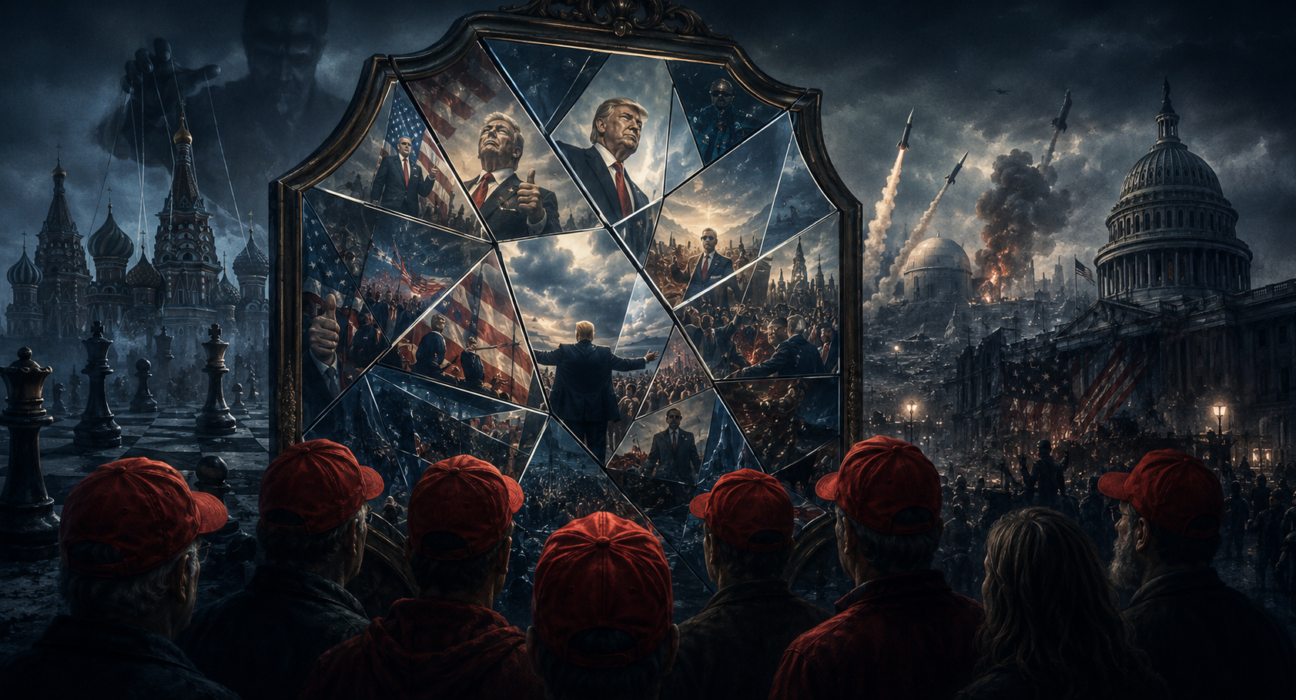
How does Irina Tsukerman explain the rise of confirmation bias and denial within the MAGA movement in relation to Trump, Russia, and the Iran war?
Irina Tsukerman is a human rights and national security attorney based in New York and Connecticut. She earned her Bachelor of Arts in National and Intercultural Studies and Middle East Studies from Fordham University in 2006, followed by a Juris Doctor from Fordham University School of Law in 2009. She operates a boutique national security law practice. She serves as President of Scarab Rising, Inc., a media and security strategic advisory firm. Additionally, she is the Editor-in-Chief of The Washington Outsider, which focuses on foreign policy, geopolitics, security, and human rights. She is actively involved in several professional organizations, including the American Bar Association’s Energy, Environment, and Science and Technology Sections, where she serves as Program Vice Chair in the Oil and Gas Committee. She is also a member of the New York City Bar Association. She serves on the Middle East and North Africa Affairs Committee and affiliates with the Foreign and Comparative Law Committee.
In this exchange, Scott Douglas Jacobsen and Irina Tsukerman examine the MAGA movement’s internal diversity, growing conformity, and susceptibility to confirmation bias, particularly regarding Russia, the 2020 election, and the Iran war. Tsukerman argues that denial of evidence and geopolitical realities reflects an unhealthy political culture. She highlights disillusionment among traditional Republicans following perceived policy failures, while Jacobsen contextualizes concerns by comparing historical presidential misconduct, suggesting current conditions, though serious, are not unprecedented.
Scott Douglas Jacobsen: Is your overall assessment, looking at the evidentiary record of the MAGA movement, that it is a diverse and usually disconnected domestic diaspora of religious fundamentalists, conspiracy theorists, anti-vaxxers, anti-science activists, and pseudo-medicine adherents who are more gullible than the general population, with severe political and other consequences?
Irina Tsukerman: I would look at two different trends. MAGA is a very diverse, big-umbrella movement of often contradictory and niche interest groups that do not have much in common other than disliking the status quo. Over time, however, I see an evolution in the level of conformity. This applies to the anti-Israel and anti-war camp on one side, and everybody else on the other.
At the same time, there is growing conformity around parts of the MAGA health movement, a general conspiratorial approach, the denial of obvious realities in favor of current geopolitical talking points, and a heavy reliance on spin that conflicts with positions many of the same people would not have subscribed to eight or ten years ago. They would have happily counted themselves as MAGA, but would not necessarily have agreed with those points. They would have said, “I am MAGA for this reason, but I do not have to agree with all the other stuff.”
Now this confirmation bias is spreading. There is a greater degree of insecurity, which is engendering the need to recycle outdated or debunked talking points that conflict with observable facts. To give a couple of examples, the first is the allegation that the Russia-based controversy over the 2016 elections was a hoax. At the time, the Senate Intelligence Committee and other investigations showed that Russia was trying to infiltrate the Trump campaign, that several highly placed individuals within the Trump campaign were convicted of corruption, lying, and obfuscation related to that trajectory, and that some of Trump’s future officials met with Russian agents of influence and discussed business and other matters with them. All of these things were credibly proven at the time. Subsequently, some Russian citizens, nationals, and agents of influence fled the U.S. to avoid examination by the FBI, the judiciary, or congressional committees.
Other evidence detailed the level of penetration and contact between Russian agents of influence and intelligence, assorted business centers, and the Trump ecosystem, including Trump himself and people closest to him, such as Jared Kushner and his sons—not Jared Kushner’s sons, Trump’s sons. Wannabe sons.
The U.S. has increased the amount of fertilizers imported from Russia, despite the fact that importing fertilizers from the pro-Western era of Morocco would probably be faster due to geographical distance and established economic borders. Some Russian industries were never sanctioned, such as aluminum for the United States and other metals, which allowed Russia to profit tremendously and fund its war against Ukraine and its other hybrid operations around the world, including Russian influence in the United States. There is an effort to deny that Russia has a successful level of influence in the U.S.
Tsukerman: That does not mean they changed the results of polls in any particular state, but it does mean they successfully infiltrated social media and other ecosystems and promoted talking points generated by their intelligence agencies, rather than ideas necessarily endemic to the American grassroots environment. There is clear evidence for these things. Yet very mainstream Republicans, including those critical of Trump on many issues, have treated this as something debunked beyond all reasonable doubt. I find that an astoundingly cynical lie. Along with the disputed 2020 election results, it has redefined the party from a party of ideas to a party of fabrications, in my opinion.
There were political and intellectual problems with this trajectory before, but these two denials are absurd and completely at odds with what is actually provable. The third issue that falls into this is the perception of the current war with Iran. There are, of course, parts of the MAGA movement that oppose war under any circumstances, but we are not talking about that.
We are talking about those who saw the Iranian regime and its pursuit of nuclear weapons as a legitimate threat, who wished, for whatever reason, that the U.S. would engage in dismantling the Iranian regime, or at least degrading its capabilities, and who were broadly supportive of the war in different capacities, depending on the person. What I find astounding is how many of these people now, after two months of operations and after some data has begun to emerge about the results of the war, believe that it has been an unmitigated success, rather than, at best, a questionable or limited success, or, more likely, a failure in those respects. That is how I would characterize it.
I was one of the people who was initially supportive, or at least open to the idea, for precisely those reasons. I am not a Trump supporter and I am not a MAGA supporter, but for the purposes of the war, I independently thought it could have at least limited value in degrading Iran’s capabilities, making it less of an international threat, and possibly creating an opening for internal dissent to become more prominent. Instead, because of the way it was handled, the opposite happened.
While some Iranian capabilities were degraded, in my opinion, the course of this venture and the problems that arose as a result heavily outweighed the benefits. The fact that so many people cannot see that, or cannot in good faith accept it as true, reflects an unhealthy relationship with reality. It is not a healthy political culture when people cannot accept that the person they support, or the policy they support, has not worked out the way they hoped.
Jacobsen: Polls have been slipping for the Trump administration and for Trump as a personality. Not significantly, but given his usual stability, he has generally been able to blunt the impact on public opinion. This war and other factors appear to be degrading that, despite the enormous sunk costs for diehard MAGA supporters. There is additional motivation for them to stay on board. How do these statistics feed into the continued denial of reality within the MAGA movement, and Trump remaining largely unfazed?
Tsukerman: Trump is in power. Bad opinion polls do not mean he is going anywhere. Given that he has gotten what he wants and can do much of what he wishes, he does not have to be accountable in the same way during a second term. It is not surprising that he cares less about public opinion polls than he otherwise might.
Regarding public opinion more broadly, it is also not surprising that it has not changed significantly. Most people have had enough exposure to Trump to understand who he is. It is unlikely that anything he does would substantially change opinions one way or the other.
What is different about the Iran war is that, for many people, it became a litmus test. It united traditional Republicans with MAGA supporters in their critique of the Iranian regime: the perception of it as a serious threat to global and American security, a severe human rights abuser, and an intolerable system that needed to be removed.
The way the war was handled—at best careless, at worst a deliberate manipulation of public opinion—caused many who were willing to give Trump the benefit of the doubt, or consider him a marginally better alternative to Biden, to reassess their position. Not regarding the Iranian regime itself, but whether this war caused more harm than good. Poor execution and planning may now make it more difficult to deal with the regime and remove it.
It has created new threats, new problems, and new image issues for the United States, as well as strengthened certain Iranian structures, among other concerns that did not exist to the same extent two months ago. Many countries in the region had hoped that degrading Iran’s capabilities would bring stability, but they were disappointed. They were also disappointed by Trump’s disinterest in their security concerns, despite agreements with Middle Eastern countries and the failure to respond adequately to attacks on civilian infrastructure.
This combination of factors caused damage that might otherwise have plateaued. Previously, many accepted Trump as he is. This situation changed that, because it united even traditional Reagan Republicans with parts of the MAGA movement. Even those outside the movement were sympathetic to the rationale for the war and found ways to defend it.
Now that support has eroded. Trump’s handling made the situation worse than the previous status quo. In that sense, he appears worse than predecessors who pursued appeasement or delay, which at least postponed escalation. This contributes to growing disillusionment, even among those who had hoped this would be an area where Trump could succeed and secure a defensible legacy. That possibility, in my view, is gone.
Jacobsen: People should bear in mind the types of charges presidents have faced – fraud, corruption, abuse – and how these have been tallied across administrations. Many in the United States may not like the current administration, its personalities, or its style, but if you look at the number of indictments, Trump is roughly at the level of George W. Bush. Compared to both of them and to Clinton, we are nowhere near the scale of what occurred during the Nixon era. In terms of sheer numbers, Nixon’s period was four or five times worse. On that metric, things are not great, but they are not irredeemable.
The MAGA movement’s denial of geopolitical consequences and policy patterns does have serious implications. However, I do not see this as a permanent or world-ending crisis. That is my general assessment, though you may see it differently.
Tsukerman: Nixon set many of the precedents for disastrous and questionable policies in Washington. Trump has actively imitated Nixon in some respects, while those in between are not quite comparable. George W. Bush can be faulted for poor policy decisions, but the level of corruption in his administration is not comparable to what we are witnessing now. He was not attempting to emulate a figure associated with criminal conduct; rather, he demonstrated flawed judgment, misinformation, and poor policy choices.
There is also an important distinction between Richard Nixon and Donald Trump. Nixon, despite the destructiveness of his policies and legacy, ultimately understood that there were limits to how far he could go in terms of paranoia and corruption. Trump does not appear to feel the same constraints.
The broader issue is that the political system has been desensitized by decades of erosion of civic, legal, and political norms. By the time Trump emerged, behavior that would have been far more scandalous had it followed immediately after Nixon had become more normalized.
Jacobsen: Thank you very much for the opportunity and your time, Irina.
Scott Douglas Jacobsen is a contributor to The Washington Outsider. He is the Founder and Publisher of In-Sight Publishing (ISBN: 978–1–0692343; 978–1–0673505) and Editor-in-Chief of In-Sight: Interviews (ISSN: 2369–6885). He writes for International Policy Digest (ISSN: 2332–9416), The Humanist (Print: ISSN, 0018–7399; Online: ISSN, 2163–3576), Basic Income Earth Network (UK Registered Charity 1177066), Humanist Perspectives (ISSN: 1719–6337), A Further Inquiry (SubStack), Vocal, Medium, The Good Men Project, The New Enlightenment Project, The Washington Outsider, rabble.ca, and other media. His bibliography index can be found via the Jacobsen Bank at In-Sight Publishing comprised of more than 10,000 articles, interviews, and republications, in more than 200 outlets. He has served in national and international leadership roles within humanist and media organizations, held several academic fellowships, and currently serves on several boards. He is a member in good standing in numerous media organizations, including the Canadian Association of Journalists, PEN Canada (CRA: 88916 2541 RR0001), Reporters Without Borders (SIREN: 343 684 221/SIRET: 343 684 221 00041/EIN: 20–0708028), and others.